How AI Agents Will Change the Way We Work

The workplace has always changed with the development of new technology. From computers replacing manual paperwork to cloud platforms improving collaboration, every major innovation has changed how people complete tasks.
Today, artificial intelligence is creating another major shift. Instead of simply using software as a tool, people are beginning to work alongside intelligent systems that can analyze information, make decisions, and complete tasks independently.
AI Agents are becoming an important part of this transformation. These intelligent systems have the potential to change how employees work, how companies operate, and how businesses create value in the future.

What Are AI Agents?
AI Agents are advanced artificial intelligence systems that can understand goals, analyze information, make decisions, and perform actions with limited human guidance.
Unlike traditional software that only follows specific instructions, AI Agents can create plans and complete multiple steps to achieve a goal. They can collect data, communicate with different tools, solve problems, and improve their performance through experience.
For example, a traditional software program may help employees organize information, but an AI Agent can analyze that information, identify important trends, and provide recommendations.
This ability allows AI Agents to move beyond simple automation and become active digital assistants in the workplace.
AI Agents Will Automate Repetitive Tasks
One of the biggest changes AI Agents will bring is the automation of repetitive work.
Many employees spend a large amount of time completing routine tasks, such as organizing documents, responding to emails, updating reports, and analyzing basic data. Although these tasks are necessary, they often require significant time and effort.
AI Agents can handle many of these responsibilities automatically. For example, an AI Agent can summarize meetings, organize schedules, prepare reports, and manage customer requests without requiring employees to complete every step manually.
By reducing repetitive tasks, AI Agents allow workers to focus on more valuable activities such as creativity, strategy, and problem-solving.
AI Agents Will Become Digital Coworkers
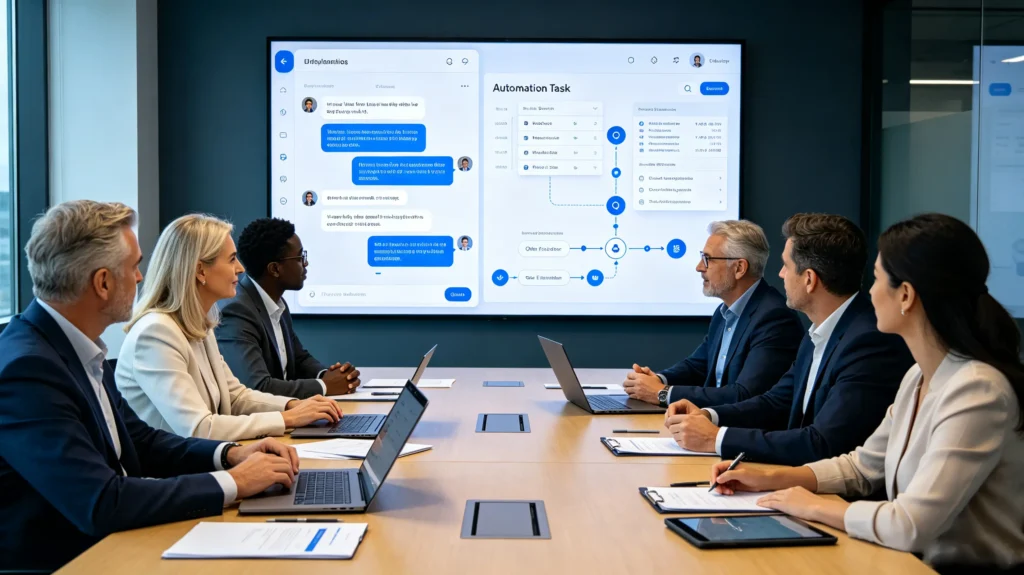
In the future, AI Agents may become similar to digital coworkers that support employees throughout their daily work.
Instead of replacing human workers completely, AI Agents can work alongside people by providing assistance and improving productivity.
For example, a marketing professional may use an AI Agent to research competitors, analyze customer behavior, and generate campaign ideas. A developer may use an AI Agent to write code, test applications, and identify technical issues.
This collaboration between humans and AI Agents creates a new working model where artificial intelligence handles complex information processing while humans focus on judgment, creativity, and decision-making.
AI Agents Will Improve Business Efficiency
Businesses are always looking for ways to improve efficiency and reduce operational costs. AI Agents can help organizations achieve these goals by optimizing workflows and automating complex processes.
For example, companies can use AI Agents to manage customer support, analyze sales data, monitor market trends, and improve internal operations.
An AI Agent can process large amounts of information much faster than humans, helping businesses make quicker and more informed decisions.
As Autonomous AI technology develops, companies may increasingly rely on AI Agents to handle important business processes.
AI Agents Will Change Different Industries
The impact of AI Agents will not be limited to one specific industry. Many fields are expected to experience significant changes.
Healthcare
In healthcare, AI Agents can help doctors analyze medical information, organize patient records, and support research. They can reduce administrative work and allow healthcare professionals to spend more time with patients.
Finance
Financial companies can use AI Agents to analyze market data, detect risks, assist customers, and improve financial decision-making.
Education
In education, AI Agents can provide personalized learning support. They can help students understand difficult topics, create learning plans, and offer feedback based on individual progress.
E-commerce
Online businesses can use AI Agents to improve customer experiences through personalized recommendations, automated support, and smarter inventory management.
AI Agents Will Create New Job Opportunities
Although many people are concerned that artificial intelligence may replace jobs, AI Agents are also expected to create new opportunities.
As companies adopt AI Agents, new roles will appear, including AI management, AI training, automation specialists, and AI strategy positions.
Workers who understand how to collaborate with AI Agents may have a competitive advantage in the future job market.
The future of work is likely to focus less on completing repetitive tasks and more on managing technology, solving problems, and creating innovative solutions.
Human Skills Will Become More Important
As AI Agents become better at processing information and completing technical tasks, human skills will become increasingly valuable.
Creativity, emotional intelligence, communication, leadership, and critical thinking are areas where humans continue to have unique advantages.
AI Agents can provide information and suggestions, but humans are still responsible for understanding context, making ethical decisions, and creating meaningful strategies.
The most successful workers in the future will likely be those who can combine human abilities with AI capabilities.
Challenges of Using AI Agents at Work
Although AI Agents offer many benefits, businesses must also consider potential challenges.
Data security is one major concern. AI Agents may need access to company information, making privacy protection essential.
Accuracy is another challenge. AI Agents can sometimes produce incorrect information or make unsuitable recommendations, so human review remains important.
Companies must also consider ethical issues, including transparency, responsibility, and proper management of AI systems.
Successful adoption of AI Agents requires a balance between automation and human oversight.
The Future Workplace With AI Agents
The workplace of the future will likely be a combination of human intelligence and artificial intelligence.
Employees may work with multiple AI Agents that help manage tasks, analyze information, and support decision-making. Instead of replacing human workers, AI Agents may become powerful tools that expand human capabilities.
As Autonomous AI continues to develop, organizations that effectively integrate AI Agents may gain advantages in productivity, innovation, and efficiency.
The future of work will not simply be about humans competing with machines. It will be about humans and AI Agents working together to achieve better results.
Conclusion
AI Agents are changing the way people work by introducing a new level of automation, intelligence, and collaboration. These systems can handle repetitive tasks, support decision-making, and help businesses operate more efficiently.
While challenges such as security and accuracy remain, the potential of AI Agents is enormous. As technology continues to evolve, AI Agents will become an important part of the modern workplace.
The future of work will be shaped by the partnership between humans and intelligent systems, creating new possibilities for productivity and innovation.