What Scientists and Experts Say About Semiconductor Chip Technology

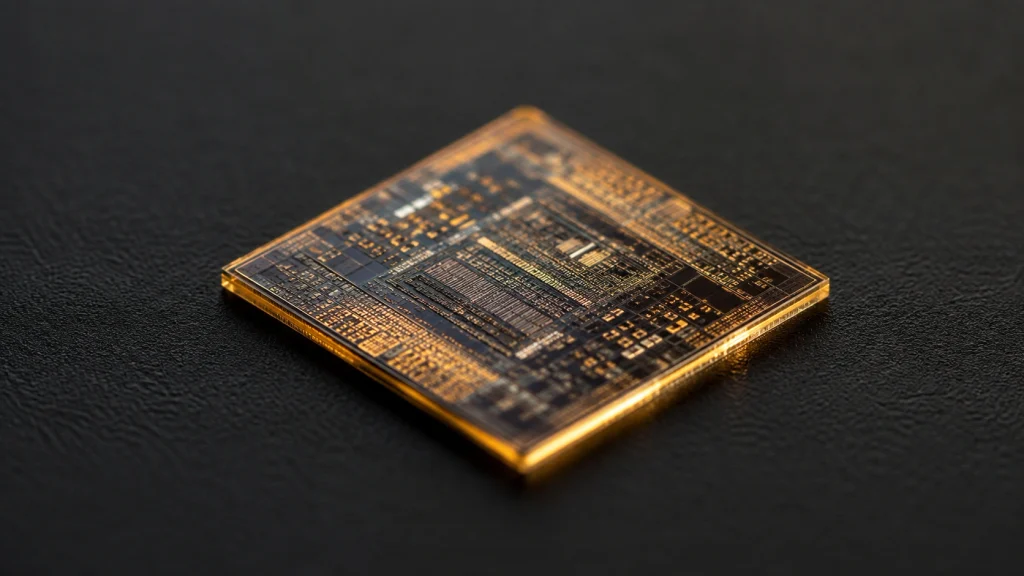
Semiconductor chips — small devices that are often undervalued in today’s world — are the lifeblood of nearly all modern technology, from smartphones to cars to medical devices to home appliances. Semiconductor technology is very much an undertold story, and even outside the industry, it remains widely misunderstood. What experts actually have to say about this technology, how it works, why it’s so strategically important, and where it’s headed offers real insight into one of the most fundamental technologies shaping modern life.
This guide explains semiconductor technology in the simplest terms, based on the consensus among experts regarding its importance, its challenges, and where it’s headed.
The Semiconductor Chip Business Is a Complex One
Semiconductor chips — also known simply as chips or microchips — are tiny electronic devices made from semiconductor materials, typically silicon, engineered to regulate the movement of electrical charges with extremely high precision. Semiconductors occupy a middle ground between materials that conduct electricity freely and those that don’t conduct it at all, allowing electrical current to pass through only when arranged in a very specific way according to an engineer’s design.
Chips are often compared to an incredibly dense, tiny city of switches called transistors, each capable of being turned on or off to represent the basic binary information — the “ones and zeros” — that underlies all digital computing. Engineers and physicists alike consider this level of miniaturization one of humanity’s most remarkable manufacturing achievements, with modern chips packing billions of these transistors into a space roughly the size of a fingernail.
Why Is Semiconductor Technology So Important?
The point engineers and industry analysts emphasize most when explaining semiconductor technology’s importance is that it’s utterly essential to every modern digital device. Semiconductor chips process information and control how everything from computers, cellphones, and cars to medical devices, industrial machinery, and household appliances functions, as more and more devices become woven into daily life.
Beyond powering individual devices, semiconductors are frequently cited as the backbone of many other cutting-edge technology industries. Rather than existing as an isolated technology sector, semiconductors are a critical component of artificial intelligence, renewable energy systems, telecommunications networks, and modern healthcare technology.
How Chips Are Really Manufactured
It’s worth understanding that chip manufacturing is one of the most difficult production processes ever developed, a distinction usually attributed to the demands of semiconductor fabrication specifically.
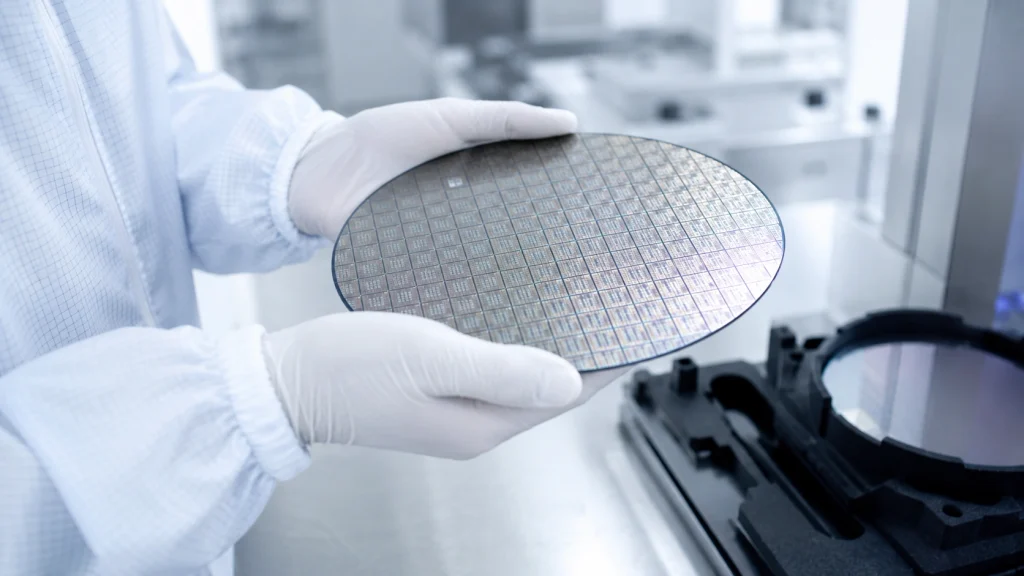
The process of making chips begins with silicon purified to a degree far beyond what’s needed for virtually any other manufacturing application. These silicon pieces are processed into ultra-thin, polished wafers, then subjected to an extremely precise process called photolithography, which essentially “prints” detailed circuit designs onto the wafer’s surface using specialized light and chemical processes. This process is repeated many times, with multiple layers added in succession, to build the intricate, multi-dimensional circuitry of a finished, functioning chip.
The precision involved is genuinely difficult to fully grasp. Modern chip manufacturing commonly operates at scales measured in mere nanometers — a distance so small that manufacturing equipment must account for factors like vibration, fluctuating temperatures, and even microscopic dust particles that could ruin an entire batch of chips.
Why Chip Manufacturing Is So Geographically Concentrated
A question experts are often asked is why, despite chips being used everywhere in the world, advanced semiconductor manufacturing capability remains concentrated in just a handful of countries and companies.
Building and operating a state-of-the-art advanced semiconductor manufacturing facility is enormously expensive, often costing several billion dollars for a single plant. On top of that, advanced chip production requires an extremely highly trained workforce with expertise that only develops after decades of accumulated experience in certain regions, creating a genuine barrier for other countries or companies trying to build comparable production capability from scratch.
As semiconductors remain essential to so many other important technology sectors, the question of how to build up domestic semiconductor manufacturing capacity has grown increasingly important, with many governments now investing heavily in the area.
The global semiconductor supply chain is also highly interconnected, a factor experts frequently cite as an additional source of concern. Even companies that design highly sophisticated chips typically rely on a relatively small number of specialized manufacturers to actually produce them, and an equally concentrated group of suppliers to provide the extraordinarily precise equipment needed for advanced chip production. This dependency means that if any single link in this global supply chain breaks, the effects ripple out to the many other industries that rely on consistent, uninterrupted access to chips.
The Ongoing Challenge of Continued Miniaturization
For decades, semiconductor progress has been closely tied to an observation made by Moore, which held that the number of transistors that could be economically fit onto a chip roughly doubled every two years, driving a steady, predictable improvement in computing power.
In recent years, the pace of miniaturization has become considerably more difficult to sustain, to the point where experts now recognize that this historical rate is approaching the limits imposed by fundamental quantum physics, which becomes increasingly significant at the physical scales transistors are now reaching. Rather than viewing this as an endpoint, however, most experts see it as a shift in direction, with growing focus on alternative approaches to boosting chip performance — including new materials research, specialized chip designs built for specific functions, and new three-dimensional chip architectures capable of delivering further performance gains beyond what miniaturization alone can provide.
How AI Is Reshaping Chip Design and Demand
One of the biggest trends in the semiconductor industry in recent years has been the rapid growth in demand for chips specifically designed for AI applications. Unlike more general-purpose chips capable of handling a wide range of computing tasks reasonably well, AI chips are being built with specialized architectures optimized specifically for the type of mathematical computation used by today’s AI systems.
This shift has become central to discussions about the semiconductor industry’s future, even as traditional, general-purpose chip manufacturing continues to advance in parallel. Experts consider this one of the biggest changes to reshape semiconductor design priorities in recent years, with substantial investment already flowing into designing AI chips for both training and processing workloads.
This surge in demand has also placed real pressure on existing manufacturing capacity. Experts frequently note that production capacity for the most advanced, AI-optimized chips hasn’t been able to keep pace with the much higher demand across the broader technology sector. This has further underscored the importance of continued investment in expanding semiconductor manufacturing capacity, since delays in chip supply can meaningfully slow progress across many other technology areas that depend on reliable access to semiconductors.
Common Misconceptions About Semiconductor Technology
Several misconceptions about semiconductor chips persist, and experts are often called on to correct them.
One common misconception is that all computer chips are essentially the same and can be used interchangeably for any purpose. In reality, modern chip design increasingly involves a growing number of highly specialized architectures, each optimized for a particular purpose — whether general computing, graphics processing, or AI-specific calculations — rather than a single design equally suited to every type of task. Another misunderstanding is that chip manufacturing is a relatively straightforward industrial process, similar to other forms of electronics manufacturing. In reality, experts consistently describe semiconductor manufacturing as among the most technically sophisticated production processes ever developed, requiring precision measured in mere nanometers. A further misconception is that the slowing pace of chip performance improvement signals the end of progress altogether. In fact, experts view this as more of a shift in improvement strategy — toward new materials and architectures — rather than a genuine limit on future advances in semiconductor technology.
Why Continued Chip Innovation Matters Going Forward
Experts across the tech industry broadly agree that continued innovation in semiconductor technology remains essential for progress in many other technology sectors. As artificial intelligence, renewable energy systems, and increasingly complex computing applications continue to grow, the underlying chip technology enabling them must keep pace, or significant progress in these other fields risks being constrained by the limitations of the semiconductors that power them.
This is one reason the semiconductor research and manufacturing industry remains so prominent, and so heavily invested in today, by both private industry and government policy — reflecting broad recognition that this core technology sector will continue to shape not just its own future, but a much wider range of industries as well.

Final Thoughts
Semiconductor chip technology stands as one of the most fundamental, yet often unrecognized, achievements underpinning modern digital life — one that engineers, manufacturers, and policymakers understand deeply, even though most people outside the field know relatively little about it. Despite real, well-documented technical and geographic challenges, semiconductor technology continues to evolve, from the extraordinary precision required in today’s manufacturing processes to the ongoing search for new strategies beyond the classical miniaturization approach.
Understanding the perspective of experts in this field offers a clearer, more accurate picture of a technology sector that quietly underlies nearly every other major advancement shaping the modern world.
Frequently Asked Questions
What is a semiconductor chip?
A semiconductor chip is a tiny electronic component, usually made of silicon, containing billions of microscopic electronic switches called transistors that regulate the flow of electrical current to process digital information.
Why is semiconductor technology so significant?
Chips are essential to most modern technology, including computers, cellphones, and medical equipment, and increasingly play a critical role in advanced fields like artificial intelligence and renewable energy.
Why is advanced chip manufacturing concentrated in so few places worldwide? Building advanced semiconductor manufacturing facilities requires enormous capital investment and deep expertise developed over many years, making it difficult for new regions to build comparable manufacturing capability.
Is Moore’s Law, the historical pace of chip miniaturization, coming to an end?
While the pace has slowed considerably, most experts describe this as a shift away from relying solely on miniaturization toward other approaches, such as specialized architectures and new materials, rather than a true end to progress.
How is AI transforming semiconductor design?
AI has driven enormous demand for specialized chips built specifically for AI-related calculations, making this one of the biggest recent trends in semiconductor chip architecture and investment.