Latest Discoveries and Updates in Genetics and Heredity

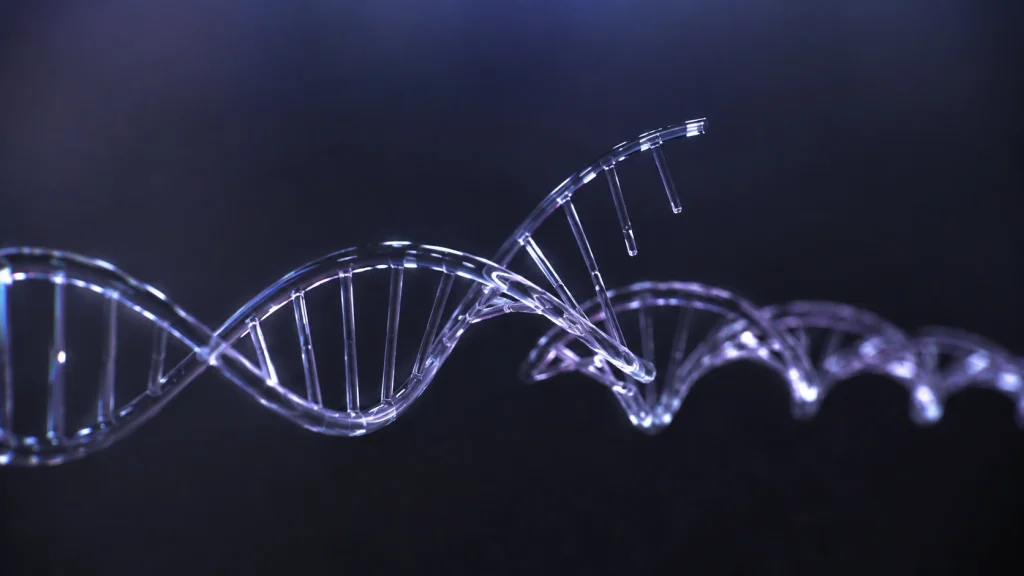
Gregor Mendel’s work with pea plants has formed the basis of the study of heredity for over 150 years, providing the foundation for the basic rules of transmission of traits from parent to offspring. Those rules have been very successful. But 2026 is also the 200th anniversary of Mendel’s birth, and it’s fitting timing, because there’s been a bumper crop of genetics research this year showing that inheritance is much more complex — and interesting — than Mendel’s rules can account for.
From this guide, you’ll learn some of the most important recent advances in the science of genes and inheritance, in plain English, and how they shed light on the transmission of traits, disease risk, and even ancient ancestry.
Inheritance That Breaks Mendel’s Classic Rules
The most striking recent discovery has come from a large, federally-funded study in mice that looked at how epigenetic marks — which modify gene activity without changing the underlying DNA sequence — are inherited across generations. Researchers followed three generations of mice, closely monitoring a specific form of epigenetic alteration known as DNA methylation, which basically functions as a “switch” that turns particular genes on or off.
The results were unexpected. About 7% of these inherited methylation marks were not passed down according to Mendel’s laws of inheritance. In some cases, researchers even detected epigenetic changes that weren’t observed in either parent, appearing seemingly from nowhere in the offspring. The study also uncovered the first naturally occurring example, in a mammal, of one gene variant modulating another variant in a way that is then inherited by future generations — a phenomenon known as “paramutation.”
The study suggests that environmental factors may contribute to heredity to a significantly greater extent than DNA sequence alone, and that these non-conventional patterns point to inheritance beyond DNA sequence. As one of the researchers involved put it, the study is a great example of something that “shouldn’t happen” driving new discoveries in genetics.
Rewriting the Ancestry of Ancient Humans
One of the most intriguing genetics studies of late has focused not on the present, but on humanity’s very distant past. While genetic evidence for two ancient human lineages — the Neanderthals and Denisovans — has long been established, researchers have now found evidence of two previously unknown, extinct human sub-populations within present-day humans.
Separately, scientists have sequenced the genomes of 27 Neanderthals who lived in Belgium and France less than about 52,500 years ago, offering a much more nuanced and detailed picture of Neanderthal population structure and diversity than earlier, smaller genetic samples allowed. These discoveries continue to challenge previously simple assumptions about the scenarios of human migration, mixing, and divergence between ancient populations.
New Genetic Clues to Healthy Aging
Genetics research is also providing new answers to one of the most universal questions in biology: why some people age more healthfully than others. A new study looked at rare genetic variation that could help explain why some people avoid illness as they grow older.
One particular mutation that caught researchers’ attention appeared to dampen chronic inflammation — a biological process closely tied to many age-related diseases. Findings like these offer real clues for biologists working to understand how people might live longer, and how to make those extra years healthy ones.
A Common Genetic Root for Two Severe Neurological Diseases
One of the most clinically important genetics discoveries this year is that amyotrophic lateral sclerosis (ALS), also known as Lou Gehrig’s disease, and frontotemporal dementia can share the same genetic cause. This finding was significant enough to earn its discoverers a share of the 2026 Breakthrough Prize in Life Sciences.
Understanding that these two seemingly unrelated neurological diseases may share a common genetic basis has important implications for both diagnosis and future drug development — research and treatments developed for one disease may prove more directly applicable to the other than if the two conditions continued to be studied as entirely separate lines of investigation.

Advances — and Open Questions — in Cancer Genetics
Other advances have also emerged in cancer genetics. Researchers have identified a new, rare type of hereditary prostate cancer that can lead to more aggressive disease at an earlier age, a finding likely to help develop more specific genetic testing and screening for at-risk families.
In another discovery, researchers identified the mechanism by which abnormal chromosome structure contributes to aggressive breast cancer, with the help of 81 newly implicated genes. These studies advance scientific understanding of the cellular mechanisms behind some of the most aggressive cancers and may pave the way for new treatments that target the genetic pathways responsible for their growth.
Researchers have also made progress in understanding other hereditary diseases throughout the body. Research into Lynch syndrome — the most common inherited predisposition to colorectal cancer — is ongoing, with further advances in screening protocols expected for affected families, who face a much higher cancer risk and require regular colonoscopies. Rather than screening everyone with a related genetic variant in the same standard way, a better genetic understanding of exactly how that increased risk arises may help refine which family members need intensive monitoring, and at what intervals.
The Growing Global Use of Genomic Newborn Screening
Beyond individual discoveries, one of the bigger genetics stories of 2026 is the scaling up and implementation of genomic technology at a population level. Several countries are now running large-scale genomic newborn screening programs designed to detect genetic disease in newborns much earlier than standard screening allows.
Brazil, for instance, has been actively working to incorporate large-scale genomic sequencing directly into its universal public healthcare system, bringing together the technology, the healthcare infrastructure, and nationwide implementation. This kind of large-scale integration is increasingly seen as a model for other countries hoping to make advanced genome screening widely available — not just to wealthy healthcare systems or those who can afford private genetic testing.
At the same time, screening an entire newborn population for a large number of genetic disorders raises significant ethical and practical questions. These include how to manage ambiguous clinical results, how to provide genetic counseling for affected families, and how to practically implement nationwide follow-up on flagged results. This ongoing conversation reflects a broader trend in contemporary genetics: the field’s ability to identify genetic risk is advancing faster than the systems built to respond to that information.
Why These Discoveries Matter Outside the Lab
It’s tempting to think of these discoveries as being of purely academic interest, but the science of genetics is quickly becoming relevant to everyday life. A more precise understanding of hereditary cancer risk is enabling earlier, more targeted screening for at-risk families. Links between seemingly unrelated diseases, such as ALS and frontotemporal dementia, can speed up research, since progress on one disease can translate into progress on the other. A better understanding of non-Mendelian inheritance patterns may also shed light on inherited health conditions that remain poorly understood today.
Even deep ancestry research carries practical relevance, as scientists learn more about patterns of genetic variation and disease susceptibility across populations — knowledge that can inform medical research and health policy.
Common Misconceptions About Genetics Research
A few misconceptions continue to shape how people think about genetics and heredity, often leading to an overly simplistic view of a complex and rapidly evolving field.
One popular misconception is that Mendel’s laws account for all patterns of inheritance. In fact, decades of research — much of it recent — have revealed many exceptions to these traditional rules, exceptions that are now becoming important sources of progress in the field rather than mere technicalities.
Another common myth is that genetic studies mostly focus on rare, unusual diseases affecting only a small number of people. In reality, genetics plays an increasing role in everyday medical practice, from cancer detection to healthy aging, affecting far more people than many realize.
It’s also often assumed that once a gene or genetic pattern is discovered, the science is essentially finished. In fact, ongoing research regularly uncovers new nuances — sometimes surprising inheritance patterns that continue to challenge the scientific understanding of the field.

Final Thoughts
Two hundred years after Gregor Mendel’s groundbreaking discoveries, genetics and heredity remain remarkably active fields of science. From inheritance patterns that defy Mendel’s classic rules, to newly identified ancestral human lineages, genetic clues to healthy aging, and shared genetic origins between seemingly unrelated diseases, the science of inheritance continues to reveal itself as complex and deeply interconnected.
With the ongoing growth of large-scale global genomic screening programs and the increasing accessibility of sequencing technology, even more of this genetic complexity is likely to be uncovered — further enriching our understanding of how traits, health, and ancestry are transmitted across generations.
Frequently Asked Questions
Do all inherited traits follow Mendel’s classic laws of genetics?
No. Recent studies have identified inheritance patterns — including certain epigenetic marks — that don’t follow Mendel’s traditional laws, revealing a far more complex picture of inheritance than previously thought.
What is paramutation, and why is it important?
Paramutation is a phenomenon in which one gene variant changes the behavior of another variant it’s paired with, in a way that can then be passed down to future generations. It has recently been demonstrated for the first time as a natural occurrence in mammals.
Has there been a recent discovery of additional ancestral human lineages?
Yes. Alongside Neanderthal and Denisovan ancestry, recent genetic studies have uncovered evidence of at least two previously unknown groups of extinct human ancestors.
Is there a genetic link between ALS and frontotemporal dementia?
Yes. Recent studies have shown that these two neurological disorders may share the same underlying genetic cause, which could have future implications for diagnosis and treatment.
Why is genomic newborn screening becoming more common worldwide?
Large-scale genomic screening allows genetic disorders in newborns to be detected far earlier than with traditional screening methods, and several countries are now working to make this available as part of their national healthcare policy.