AI Agents vs Chatbots: What Is the Difference?

Digital communication has changed significantly in recent years. Businesses are increasingly using intelligent tools to improve customer service, automate workflows, and provide faster support.
Many people use the terms AI Agents and Chatbots interchangeably, but they are not the same technology. While both systems can communicate with users and provide information, their capabilities, working methods, and levels of independence are very different.
Understanding the difference between AI Agents and Chatbots can help businesses choose the right solution for improving efficiency and creating better user experiences.

What Is a Chatbot?
A Chatbot is a software program designed to communicate with users through text or voice. It can answer questions, provide information, and complete simple tasks based on programmed rules or artificial intelligence models.
Traditional Chatbots usually work by recognizing keywords or matching user questions with predefined responses. For example, a customer service Chatbot may answer common questions about shipping, product information, or account settings.
Modern AI-powered Chatbots use natural language processing and machine learning to understand conversations more effectively. These Chatbots can provide more natural responses compared with older rule-based systems.
However, most Chatbots still focus mainly on conversation. They usually respond to user requests but do not independently plan actions or complete complex tasks.
What Is an AI Agent?
An AI Agent is a more advanced artificial intelligence system that can understand goals, make decisions, plan tasks, and take actions with limited human guidance.
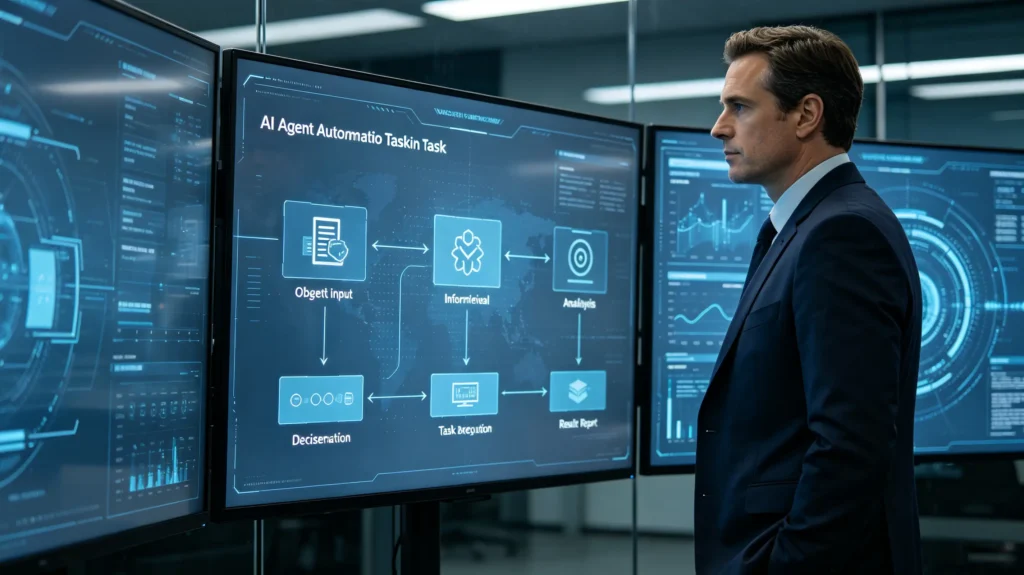
Unlike a Chatbot that mainly provides answers, an AI Agent can actively work toward completing objectives. It can collect information, analyze data, use external tools, and complete multiple steps automatically.
For example, if a user asks an AI Agent to prepare a business report, the AI Agent may search for relevant information, organize data, analyze results, and create a final document.
The key difference is that an AI Agent is designed not only to communicate but also to act.
AI Agents vs Chatbots: Key Differences
Level of Autonomy
The biggest difference between AI Agents and Chatbots is autonomy.
A Chatbot usually waits for user input and responds based on available information. It follows a conversation flow and focuses on answering questions.
An AI Agent can operate more independently. After receiving a goal, it can decide what steps are needed, complete tasks, and adjust its approach when situations change.
For example, a Chatbot can tell users how to book a flight, while an AI Agent may search available flights, compare prices, and help complete the booking process.
Decision-Making Ability
Chatbots are mainly designed for communication. They provide responses based on training data, rules, or available knowledge.
AI Agents have stronger reasoning abilities. They can evaluate information, compare options, and make decisions based on specific goals.
This makes AI Agents more suitable for complex tasks that require planning and problem-solving.
Task Execution
Another important difference between AI Agents and Chatbots is their ability to perform actions.
A Chatbot may explain how to complete a task but usually cannot perform many steps independently.
An AI Agent can interact with different software systems, databases, and tools to complete tasks automatically.
For example, a customer service Chatbot may provide refund instructions, while an AI Agent could check order details, verify eligibility, and process the refund request.
Learning and Adaptability
Modern Chatbots can improve through machine learning, but their ability to adapt is often limited.
AI Agents are designed to learn from interactions, analyze previous results, and improve their performance over time.
This adaptability allows AI Agents to handle changing situations more effectively.
How Do AI Agents and Chatbots Work Together?
Although AI Agents and Chatbots are different, they are not competitors. In many cases, they can work together to create better user experiences.
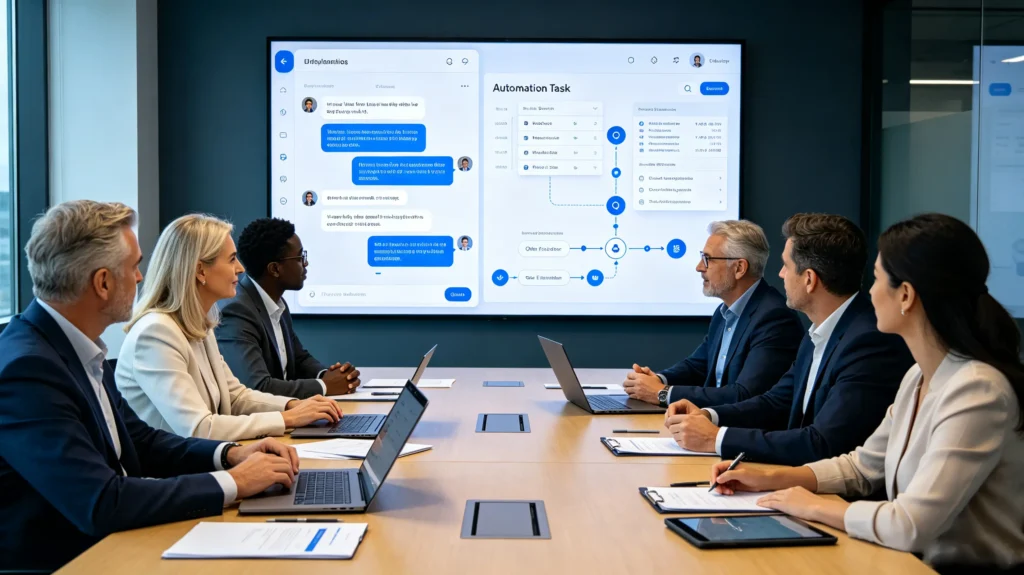
A Chatbot can serve as the communication interface, allowing users to interact naturally through conversations.
Behind the scenes, an AI Agent can handle complex tasks, analyze information, and execute actions.
For example, an online shopping assistant may use a Chatbot to communicate with customers while an AI Agent manages product searches, inventory checks, and personalized recommendations.
This combination allows businesses to provide both convenient communication and powerful automation.
Benefits of Chatbots
Chatbots remain useful because they provide several advantages.
First, Chatbots are easy to deploy and can handle common customer questions efficiently.
Second, they reduce the workload of customer service teams by answering repetitive inquiries.
Third, Chatbots can provide instant responses at any time, improving customer satisfaction.
For businesses with simple support needs, a Chatbot can be an affordable and effective solution.
Benefits of AI Agents
AI Agents provide more advanced capabilities compared with traditional Chatbots.
One major advantage is automation. AI Agents can complete complex workflows without requiring users to control every step.
Another benefit is improved productivity. Businesses can use AI Agents for research, analysis, customer management, and operational tasks.
AI Agents can also provide personalized experiences because they can understand context, analyze user behavior, and adapt their actions.
Which One Should Businesses Choose?
The choice between AI Agents and Chatbots depends on business needs.
Chatbots are suitable for simple tasks such as answering frequently asked questions, providing basic information, and handling standard customer requests.
AI Agents are better for complex tasks that require decision-making, planning, and interaction with multiple systems.
For example, a small business that only needs basic customer support may benefit from a Chatbot. A company that wants to automate sales processes, data analysis, or business operations may need an AI Agent.
Many organizations are now combining both technologies to achieve better results.
The Future of AI Agents and Chatbots
The development of artificial intelligence is changing how businesses interact with customers and manage daily operations.
Chatbots will continue to improve in understanding human conversations and providing faster support. At the same time, AI Agents will become more advanced, capable of handling increasingly complex tasks.
In the future, the difference between AI Agents and Chatbots may become smaller as both technologies continue to evolve. However, the main distinction will remain: Chatbots focus on communication, while AI Agents focus on achieving goals through independent actions.
Conclusion
AI Agents and Chatbots are both important artificial intelligence technologies, but they serve different purposes.
Chatbots are designed mainly for conversations and customer support, while AI Agents are built for autonomous decision-making and task execution.
Understanding the difference between AI Agents and Chatbots helps businesses choose the right technology for their needs. As artificial intelligence continues to develop, both systems will play an important role in creating smarter, faster, and more efficient digital experiences.