How Satellite Tech Connects Our World

Most of us have a small, unnoticed moment that takes place daily without a second thought. Before you go outside, you check the weather on your phone. You enter an address into a mapping app and trust it to get you there. After a long day, you sit down to watch a show. In each of these moments, something is happening far above your head, literally, that makes it all possible.

It’s satellite technology.
This kind of thing is often assumed to be the domain of scientists, engineers, or tech-savvy individuals. But there’s no need to be a rocket scientist, or have a large budget, to understand how satellites work and how vital they are to your everyday life. Once you grasp the fundamentals, you’ll start to see how much of your daily routine involves satellite technology, and you’ll be far better equipped to use services like TV, internet, and navigation more purposefully and cost-effectively.
This guide breaks down the technology, the science, and the applications of satellite technology in simple terms, and explains where you’ll find it in everyday life, without blowing your budget in the process.
What Satellite Technology Actually Means
The simplest definition of satellite technology is the use of devices orbiting the Earth, known as satellites, to communicate between two locations. Picture a satellite as a relay station floating in space. It picks up a signal from a location on Earth and sends it to another location, possibly far away, in a matter of seconds.
This is the behind-the-scenes work that powers an impressive range of things you’re already using. From long-distance phone calls and live television broadcasts to GPS directions and weather forecasts, satellites are quietly at work above our heads in many different ways.
Don’t be intimidated by the engineering side of it, just focus on making good use of it. Understanding how it functions puts you in a better position to make sound decisions about the satellite-based services you use at home.
How Satellites Transmit and Receive Information
The process behind satellite communication is easier to understand than it sounds. In general, it involves three steps.
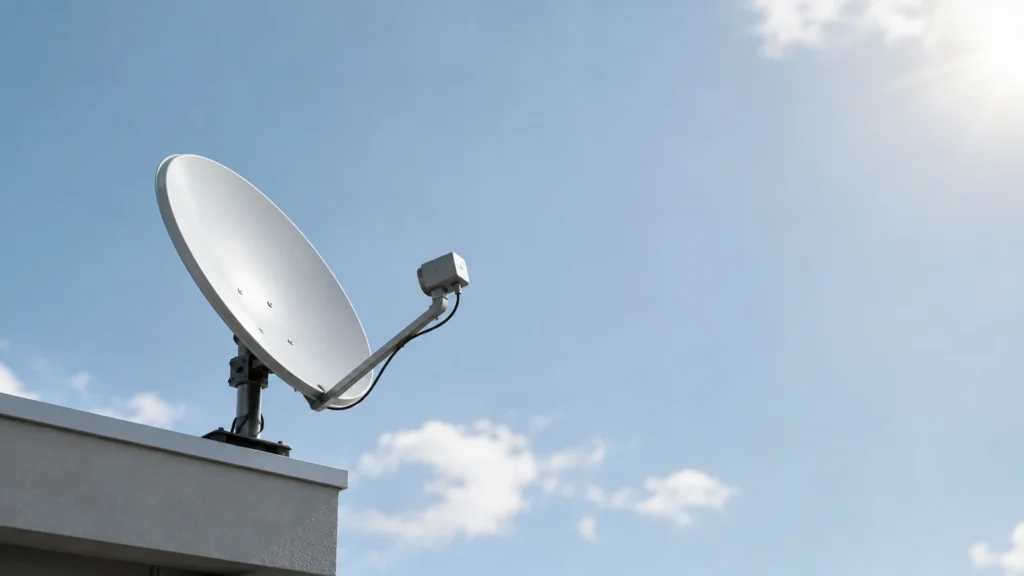
A signal is sent upward from a ground station, device, or antenna. This is referred to as the uplink. The satellite then captures the signal, processes it, and redirects it toward its destination. Finally, the signal is sent back down to Earth to a receiver, such as a satellite dish on a roof, a phone, or even a GPS device in a car. This last step is called the downlink.
A helpful way to picture this is as a relay race in the sky. Instead of a baton being passed from player to player along the ground, the “baton” (the signal) is thrown all the way up to a satellite, which then tosses it back down to wherever it’s needed.
Because satellites orbit so high above the Earth, a single one can cover a vast area, which is exactly why satellite technology is so effective at reaching remote regions, connecting across oceans, and broadcasting to large audiences at once.
The Different Types of Satellites
Satellites don’t all perform the same function. Once you identify the key categories, it becomes much easier to see which ones are shaping your daily life.
Communication satellites send and receive information to and from Earth, powering services like television broadcasts, phone calls, and internet access, particularly in regions where cables and fiber aren’t practical. Navigation satellites, often called GPS satellites, are what allow your phone or car to pinpoint your location and calculate directions. Weather satellites monitor storms, temperature changes, and broader climate patterns, providing the data used in daily forecasting. Earth observation satellites are used for mapping, agricultural monitoring, and even the satellite imagery you see on mapping apps.
Most people rely on all four types of satellites every day without ever distinguishing between them. Still, it’s helpful to know the difference in order to better understand just how deeply this technology is woven into daily life.
Everyday Examples of Satellite Technology in Use
Once you start looking for it, you’ll find satellite technology almost everywhere. A live sports broadcast or satellite TV channel depends on communication satellites to carry that transmission into your home. If you live in a rural or remote area, satellite internet may be filling a coverage gap that cable and fiber can’t reach. GPS satellites are working in the background of nearly every navigation-based task in daily life, from checking directions before a road trip to tracking a delivery driver’s route or monitoring a run with a fitness app. And the severe weather warning on your phone, or the seven-day forecast you check each morning, comes from data gathered by weather satellites high above.
This matters a great deal to renters, remote workers, students, and anyone who moves often. Reliable access to internet and communication resources makes a real difference in day-to-day life, and in many cases, satellite-based options can offer a flexibility that traditional infrastructure simply can’t match.
Satellite vs. Cable, Fiber, and Cellular
Satellite technology isn’t necessarily the best solution for everyone, and it’s worth knowing when it’s actually the right fit. It tends to come into play in areas where cable or fiber lines haven’t been installed, in temporary housing situations where a permanent installation would be impractical, or as a reliable backup option in case primary connectivity fails.
That said, there are some trade-offs to be aware of. Heavy weather can disrupt satellite signals, and depending on the service, there may be slightly more latency than with a wired connection. None of this makes satellite technology a poor choice, it simply means it’s better suited to certain situations than others, rather than being a universal replacement for cable or fiber.
If you’re weighing your options, it’s worth taking the decision seriously. Shop around, look closely at what each plan actually covers, and read the fine print in contracts. This is a small step that can save you both money and a fair amount of frustration down the line.
Budget-Friendly Ways to Access Satellite Services
Whether satellite TV, internet, or navigation tools are already part of your life, or something you’re considering, there are genuine ways to save money without compromising on quality.
Don’t settle for the first provider you come across, compare a few first. Pricing, equipment fees, and contract terms can vary more than expected. It’s also worth asking about bundle pricing, since many companies offer a discount when TV, internet, and phone service are combined rather than purchased separately.
Timing matters too. Promotional offers are frequently rolled out during major shopping periods, so checking provider websites and online stores for current offers before signing up can lead to real savings. It’s also worth simply asking about loyalty or referral discounts; many companies offer these to existing customers, or to anyone who asks, even if they’re not advertised upfront.
Another easy step is signing up for a provider’s newsletter, since subscribers are often the first to receive discount codes. When shopping for satellite electronics or accessories, checking general deal-aggregator or coupon sites first can save you the hassle of hunting down individual retailer discounts one by one.
None of these steps require extreme frugality or sacrifice. They’re simply small, intentional habits that let you stay connected the way you want, without spending more than necessary.
Renter- and Budget-Friendly Setup Options
If you rent your home or simply don’t want a permanent installation, there are more flexible options available than most people realize. Portable or tripod-mounted satellite dish kits offer many of the same benefits as a professionally installed system, without drilling into a roof or committing to a long-term contract. They also tend to be more affordable and easy to move if you relocate.
The same applies to equipment like GPS devices or satellite accessories. Reputable online marketplaces often carry refurbished or open-box versions of this kind of gear, which can perform just as well as new equipment at a noticeably lower cost. If you’re comfortable browsing secondhand listings, this is often one of the simplest ways to access satellite-powered tools without a large upfront investment.
Common Misconceptions About Satellite Technology
A handful of misconceptions tend to keep people from even considering satellite-based services, and most of them don’t hold up under closer examination.
A common myth is that satellite internet is always slower than other options. In reality, this depends largely on the provider and plan, and many modern services are highly competitive. Another misconception is that satellite setups require a large, conspicuous dish; today’s equipment is typically much smaller and easier to install than people expect. And while satellite services were once considered a luxury, high-cost option, competitive pricing and promotions have made them far more accessible than they used to be.
Letting go of these outdated assumptions makes it easier to consider satellite technology as a genuinely practical option, not just a fallback.
Final Thoughts
Satellite technology is one of those quiet, out-of-sight forces that shapes far more of daily life than most people realize. Satellites are working steadily and unobtrusively above us, present in the shows we watch, the directions that guide us, and the forecasts we check every morning.
Understanding how this technology works isn’t just a matter of curiosity, it also puts you in a stronger position to make smart, cost-effective decisions about the services you rely on. A bit of comparison shopping, openness to bundled plans or refurbished equipment, and some patience for seasonal sales and promotions can go a long way toward keeping these tools affordable.
The next time you’re considering a satellite TV plan, internet service, or GPS device, take a few extra minutes to compare your options and look for current deals. It’s a small, intentional habit that helps keep you and your family connected, comfortable, and in control of your budget.
Frequently Asked Questions
What are the applications of satellite technology in day-to-day life?
Most of us use satellite technology daily without realizing it, it powers TV broadcasting, internet access (particularly in rural areas), GPS navigation, and weather forecasting.
Is satellite internet a good option for rural areas?
Often, yes. It can reach areas where cable or fiber networks aren’t available, though factors like weather sensitivity are worth considering before committing.
What is the average price for satellite TV or internet service?
Pricing depends on the provider and plan, so it’s worth doing your due diligence, comparison shopping, and keeping an eye on bundles and promotions.
Do you need to permanently install satellite service at a rental property?
No. Portable or tripod-mounted dish kits offer an alternative to a fully installed setup, making them a practical choice for renters.
Is satellite technology less relevant than newer internet options?
Not at all. It remains useful and, in many cases, essential for remote and rural connectivity, and it continues to get faster and more affordable.