What Is Industrial Automation? Help Workers

What Is Industrial Automation? Help Workers
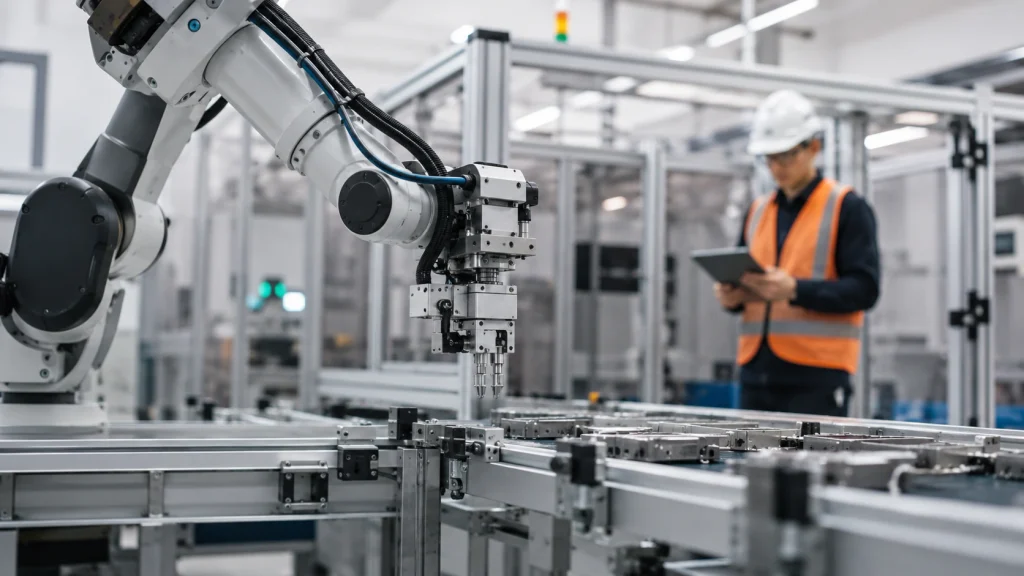
Look at the workplace of any modern factory, warehouse, or manufacturing plant today, and you’ll find machines performing what used to require a full team of workers: welding car bodies, sorting packages, mixing chemicals, or assembling precision electronic components. This is industrial automation, and while it’s often seen as a threat to jobs, it’s frequently far more of an ally to workers than most people realize.
This guide explains what industrial automation actually is, how it works, and how it’s genuinely transforming the role of human workers rather than simply replacing them.
What Industrial Automation Actually Means
Industrial automation is the use of technology, including machines, control systems, and software, to carry out manufacturing or production processes with minimal manual labor. Automated systems handle repetitive, physically demanding, or highly precise tasks, while humans focus on the work that requires oversight, decision-making, and more complex judgment.
It isn’t just one particular technology, but a broad range of tools, from robotic arms on assembly lines and automated conveyor systems to computer-controlled machinery and, more recently, software that monitors and controls entire production processes in real time.
A Brief History of Automation in Industry
Automation has been around for quite some time. Early examples date back to simple mechanical devices used to reduce manual labor in factories during the industrial revolution. As electricity, and later computing power, became more widespread, automation progressed from basic mechanical assistance to far more sophisticated, programmable systems.
The real turning point came with the introduction of programmable robots in manufacturing during the mid-20th century, allowing machines to carry out multiple tasks instead of just one fixed motion. From there, advances in sensors, computing, and software steadily expanded what automated systems could actually do, moving from basic repetitive actions to adaptive processes capable of adjusting their behavior in real time as conditions changed.
This evolution matters because it shows that automation wasn’t a sudden shift, but a continuous one, gradually changing the nature of industrial work rather than eliminating it outright.
The Core Components of Industrial Automation
Most industrial automation systems rely on a handful of fundamental components working together.
Sensors gather real-time data from the production environment, including temperature, pressure, position, or product quality, allowing systems to adapt to changing conditions instead of operating blindly.
Control systems take in that data and decide what action should happen next, whether that means adjusting machine speed, triggering a robotic movement, or flagging a defect for human review.
Actuators and machinery physically carry out those actions, whether it’s a robotic arm performing a task or a conveyor moving products through different stages of production.
Software and monitoring systems oversee the overall process, tracking performance, identifying inefficiencies, and often giving human operators a clear, real-time picture of how the production line is actually functioning.
Together, these components allow automated systems to handle repetitive or highly precise tasks reliably, while still leaving room for human intervention in exception handling, troubleshooting, and higher-level decision-making.
How Industrial Automation Actually Helps Workers
The conversation around automation tends to focus heavily on job loss, and that is a real factor, automation does change the nature of certain roles. But experts and industry data consistently point to several ways automation genuinely benefits the workers who remain part of these systems.
Reducing Physically Demanding and Dangerous Work
Many industrial tasks carry real physical risk, including repetitive heavy lifting, exposure to extreme heat, and handling hazardous materials. These are often the exact tasks automation takes over, reducing workplace injuries and helping workers shift into roles centered on judgment, oversight, and problem-solving rather than repetitive physical strain.
Reducing Repetitive Strain and Monotonous Labor
Repetitive movements performed thousands of times over the course of a shift can cause significant physical strain and mental fatigue over time. By taking on these repetitive tasks, automation can ease the physical burden on workers and allow them to focus more on complex, engaging work.
Creating New, Often Higher-Skilled Roles
As automation takes over specific repetitive tasks, new roles tend to emerge around managing, maintaining, and improving those systems. Positions like automation technicians, systems operators, and quality control specialists often require more specialized training than the tasks they replace, which can lead to higher wages and more stable, skilled career paths for workers willing to adapt.
Improving Workplace Safety Monitoring
Beyond physical automation, many modern systems include safety monitoring features, such as sensors that detect unsafe conditions and automatically shut down equipment when a hazard is identified. This kind of real-time monitoring can catch potential safety issues faster than manual oversight alone, helping keep workers on the floor safer.
Supporting Workers Through Data and Decision-Making Tools
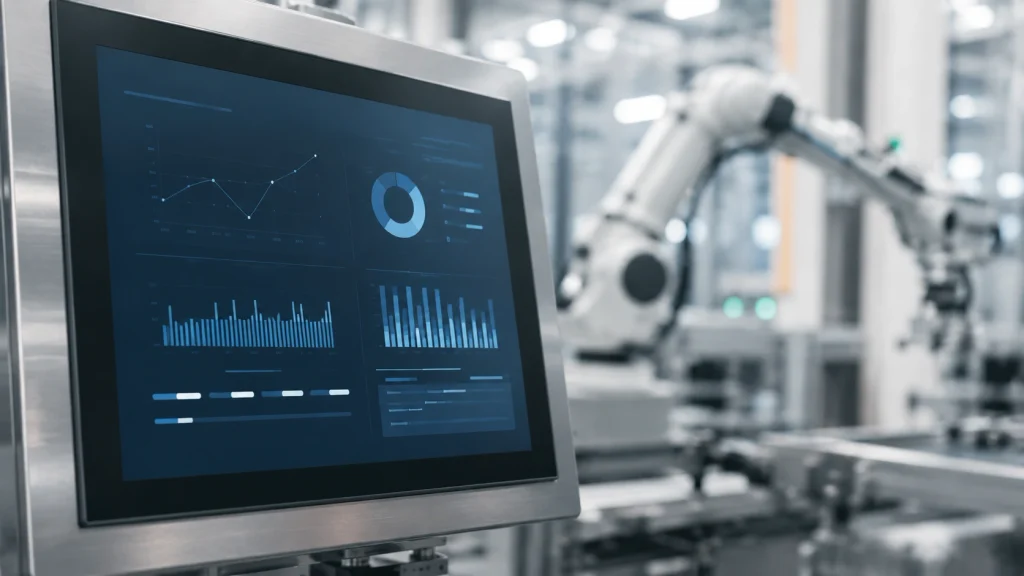
Automation isn’t only about physical tasks. Many systems now give workers real-time dashboards, alerts, and diagnostic tools that make it easier to pinpoint problems and make informed decisions quickly, avoiding the time and stress that once came with troubleshooting through guesswork.
The Real Challenges Automation Presents for Workers
It wouldn’t be an honest picture of industrial automation without acknowledging the genuine challenges it introduces alongside its benefits.
Some roles, particularly those built entirely around manual, repetitive tasks, can be reduced or replaced as automation expands. For workers whose skills were built specifically around those tasks, this transition can be genuinely difficult, especially without access to retraining or support along the way.
The pace of technological change matters too. When automation is introduced quickly, with little training or communication, workers can understandably feel uncertain about their job security and unclear on what new responsibilities they’ll be expected to take on. How well automation ultimately serves the workers involved depends heavily on how it’s implemented, including whether training and transition support are actually made available.
This is part of why discussions about automation increasingly focus not just on the technology itself, but on the policies, training programs, and workplace practices that shape how that technology is introduced.
There’s also a broader question of pacing across entire industries and regions. A single factory adopting automation gradually, with input from its workforce, tends to see a very different outcome than an industry-wide shift happening rapidly with little coordination. Economists studying labor markets often point out that the disruption caused by automation isn’t fixed or inevitable, it’s shaped significantly by decisions made at the company, industry, and policy level, rather than being a purely technological outcome.
Industries Where Automation Is Reshaping Work
Automation looks different depending on the industry, and a few key examples help illustrate its broader impact.
Manufacturing remains one of the most heavily automated industries, with robotic arms increasingly handling welding, assembly, and packaging, while human workers focus more on quality control, system maintenance, and process improvement.
Warehousing and logistics have also seen significant automation growth, with automated sorting systems and robotic assistance helping workers move and organize products more efficiently, reducing physically demanding lifting and walking.
Food and beverage production frequently relies on automated systems for tasks like packaging, sorting, and quality inspection, particularly in high-volume facilities where consistency and hygiene are critical.
Automotive manufacturing was among the earliest industries to heavily adopt robotics, and continues to depend on automated systems for welding, painting, and precision assembly, while skilled technicians oversee and maintain those systems.
Across all of these industries, a consistent pattern emerges: automation tends to take over specific, well-defined tasks, while human workers shift toward oversight, troubleshooting, and continuous improvement.
Common Misconceptions About Industrial Automation
A few misconceptions continue to shape public perception of industrial automation, and many of them oversimplify a more nuanced reality.
A common myth is that automation simply replaces jobs rather than creating any. In many cases, automation changes the content of a role rather than eliminating it outright, though how that plays out depends heavily on management and implementation. Another misconception is that automation only benefits company profits, with no real advantage for workers. In reality, despite the challenges of the transition process, there are genuine benefits for workers, including reduced physical strain, improved safety, and newly created skilled roles. There’s also a common assumption that automation is a recent, sudden development, when it has actually been steadily evolving for well over a century, gradually transforming industrial work over time.
What This Means for the Future of Industrial Work
As automation technology continues to advance, particularly in sensors, robotics, and artificial intelligence, its role in industrial settings is likely to keep expanding. Rather than framing this purely as job loss, many labor economists and industry insiders describe it as an evolving way of doing industrial work, one that increasingly involves more technical skill, oversight, and flexibility, and less repetitive manual labor.
This shift also places growing importance on training programs, apprenticeships, and educational pathways that help workers move into the new roles automation creates, since the long-term impact on workers depends heavily on whether that kind of support keeps pace with the technology itself.
Final Thoughts
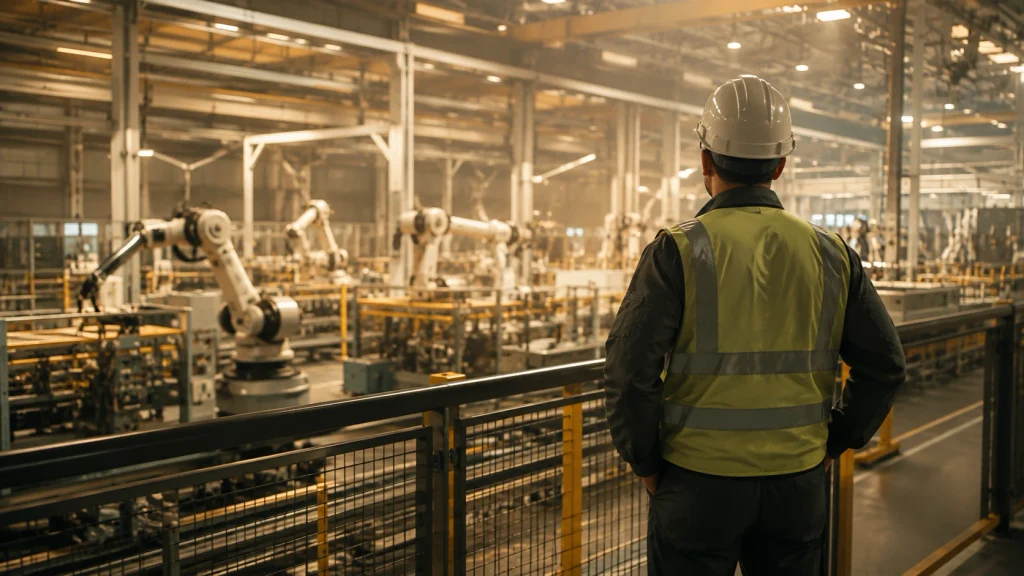
It’s easy to picture industrial automation as simply machines replacing humans, but the reality is far more layered. Automated systems are taking over physically demanding, repetitive, and dangerous work, often making workplaces safer and less physically taxing for the humans who remain part of these systems. At the same time, automation isn’t only eliminating certain roles, it’s also generating new categories of skilled work, even as genuine challenges remain for workers whose jobs are most directly affected by these changes.
Understanding industrial automation clearly, both its real benefits to workers and the real challenges it presents, offers a far more accurate picture than the simplified narratives often found in public conversation. As the technology continues to evolve, how it’s implemented, and how well workers are supported through that transition, will likely matter just as much as the technology itself.
Frequently Asked Questions
In simple terms, what is industrial automation?
Industrial automation refers to the use of machines, control systems, and software to carry out manufacturing or production processes with minimal human involvement, freeing workers to focus on oversight and monitoring.
Is industrial automation a job killer?
Not necessarily. Automation can eliminate certain repetitive jobs, but it also frequently introduces new, more skilled roles, especially when paired with proper training and support.
What’s the benefit of automation for workers?
Automation can reduce physically strenuous or dangerous work, minimize repetitive strain, improve safety monitoring, and create new technical roles that often come with better pay and more stable career prospects.
Which industries rely most heavily on industrial automation?
Industrial automation has had a significant impact on manufacturing, warehousing and logistics, food and beverage production, and automotive manufacturing.
Can automation be a good or bad thing for workers?
Much of the outcome depends on how it’s implemented, including the availability of retraining programs, clear communication, and support for workers as they transition into new roles.