Solar System Future: Beyond Our Stars

Night after night, the sun rises and sets, the moon changes its shape, and the planets keep on their regular paths through the sky. It’s easy to imagine the solar system as a permanent backdrop, untouched by anything happening on Earth. But according to astronomers, there is nothing permanent about it. The sun is growing old, the planets are slowly moving through continuous changes, and beyond our own neighborhood, human exploration is steadily pushing outward.
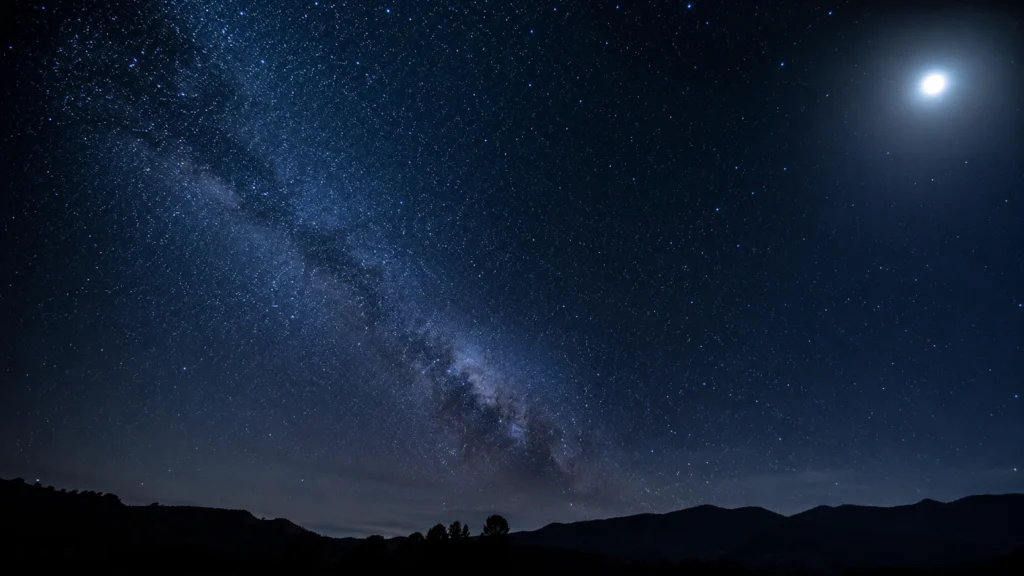
This guide explores the path the solar system is traveling, what scientists predict will occur over the next several billion years, and the new discoveries that continue to emerge as researchers explore “beyond our stars.”
A Quick Solar System Overview
The solar system is made up of the sun, eight planets, their moons, smaller bodies known as dwarf planets, and countless asteroids, comets, and other objects, all held in orbit around the sun. It formed roughly 4.6 billion years ago from a massive cloud of gas and dust, and while it’s young on a cosmic scale, it’s far from young in human terms.
The sun, sitting at the center of the solar system, is also the object most central to the solar system’s entire long-term future.
The Sun’s Slow, Long Transformation
All stars have a life cycle, and the sun is a star. It’s currently in a stable, middle-aged stage, fusing hydrogen into helium at its core. This process has fueled the sun for the last 4.6 billion years and is expected to continue for several billion more.
Eventually, though, the sun will run low on hydrogen fuel. When that happens, astronomers predict it will swell dramatically into what’s known as a red giant. At that point, the sun could expand to the size of Mercury and Venus’s orbits, and possibly reach as far as Earth’s orbit.
This change isn’t imminent on any human timescale, astronomers estimate it to be roughly five billion years away. Even so, it remains one of the most significant long-term transformations the solar system will ever undergo.

What Happens to Earth and the Inner Planets
Long before the sun actually reaches Earth, its growing heat and size will already have drastically affected life here. Over the next billion years, the sun’s increasing output is expected to slowly warm the Earth, making it unsuitable for life well before the more dramatic later stages of the sun’s life cycle occur.
Mercury and Venus, the two planets closest to the sun, are expected to be completely destroyed once the sun expands. Earth’s fate is less certain. Some models suggest it could also be engulfed, while others propose the sun may lose enough mass during the process for Earth’s orbit to shift outward just enough to escape being swallowed, though it would still become a lifeless, scorched world either way.
What Happens to the Outer Solar System
The outer planets tell a very different story, since they’re expected to undergo a very different transformation. The icy giants, Jupiter, Saturn, Uranus, and Neptune, along with their numerous moons, are thought to survive the sun’s death, continuing to orbit its remnant: a dense, white dwarf.
Interestingly, some of Jupiter’s and Saturn’s icy moons, currently frozen due to their distance from the sun, may experience a brief warm-up period during the sun’s red giant phase. This has led some scientists to speculate about short windows of habitability far from where life exists today, though this remains a highly theoretical possibility still far from being tested.
How the Solar System Fits Into an Evolving Galaxy
The sun isn’t the only factor shaping the solar system’s future. The solar system also sits within the Milky Way galaxy, which is itself on a long-term, head-on collision course with our neighboring galaxy, Andromeda.
Over the course of several billion years, astronomers believe the Milky Way and Andromeda will collide and eventually merge into a single galaxy. Even though this sounds dramatic, individual star systems, including our own, are unlikely to actually collide with one another, since space within galaxies is mostly empty. Instead, the merger would gradually reshape the galaxy’s structure over an immense span of time.
How Exploration Is Broadening Our Understanding
The deep future of the solar system unfolds on a timescale of billions of years, but human exploration is actively advancing our understanding of it right now. Robotic missions have already explored every planet in the solar system, along with many of its moons, asteroids, and comets, dramatically expanding scientific understanding of how they formed and evolved.
Spacecraft such as Voyager have already traveled beyond the solar system’s immediate surroundings and continue transmitting data from interstellar space. Icy moons of the outer planets, including Europa and Enceladus, both believed to have subsurface oceans, are considered strong candidates for conditions that could support life, and remain the focus of ongoing and planned missions.
Meanwhile, renewed interest in crewed exploration, including plans for longer lunar missions and eventual human travel to Mars, reflects a growing interest in understanding not just our solar system’s future, but humanity’s potential role within it.
Common Misconceptions About the Solar System’s Future
There are several misunderstandings about the solar system’s future, and most of them don’t hold up to scrutiny.
A common myth is that the sun could simply “burn out” or explode without warning. In reality, the sun’s transformation into a red giant, and eventually a white dwarf, is a slow, well-understood process that will unfold over billions of years, not something sudden or unexpected. Another myth is that Earth’s destruction is certain, when in fact scientists are still divided on whether it will ultimately be engulfed by the expanding sun or narrowly escape. There’s also a common assumption that a galactic collision, like the anticipated Milky Way-Andromeda merger, would be a sudden, catastrophic event, when it’s actually expected to be a gradual process with little direct effect on any individual star system.
Why Studying the Solar System’s Future Matters
Studying events billions of years away may seem to have little real-world application, but astronomers argue otherwise. Understanding the evolution of stars like the sun helps scientists understand the evolution of stars found throughout the universe, many of which are at different stages of that same life cycle.
This research also contributes to the broader effort to find potentially habitable environments beyond Earth. By studying how conditions on planets within our own solar system might change over time, scientists gain a better understanding of what conditions for life might look like, both now and in the future, around other stars.
Final Thoughts
From our vantage point, the solar system might seem as though it has always been here and always will be, but that isn’t the case. Its changes unfold on a long-term scale, taking billions of years to occur. The sun will eventually transform, the inner planets face an uncertain and dramatic future, and even the galaxy itself will undergo eventual change. Meanwhile, exploration continues to reveal more about the surrounding universe, and our place within it.
None of these changes matter on a human timescale, but they serve as a reminder that even something as vast and stable as the solar system is part of an ongoing, still-unfolding story, one that scientists continue working to understand.
Frequently Asked Questions
What will the fate of the sun be?
Once it runs out of hydrogen fuel, the sun will eventually evolve into a red giant, followed by a dense white dwarf, a transformation expected several billion years in the future.
Will Earth be destroyed when the sun expands?
It’s uncertain. Some models suggest Earth may be engulfed when the sun expands, while others suggest it could survive, though it would become uninhabitable either way.
What will happen to the outer planets?
The outer planets, such as Jupiter, Saturn, Uranus, and Neptune, are believed to survive the sun’s transformation and will continue orbiting whatever remains of it.
Will the Milky Way’s collision with Andromeda destroy our solar system?
No. The two galaxies will merge over billions of years, but individual star systems are unlikely to collide, since there is a vast amount of empty space between them.
Why do scientists study the far future of the solar system?
This research advances our broader understanding of stellar evolution and offers clues about how habitability might change, both within our own solar system and around other stars.