Stuck on Chemistry? Chemical Reactions Explained Simply

Still recall when chemistry class began to sound like a foreign language? Perhaps it was a lecture about molar mass or a lab handout with all the chemical symbols jumbled up. It’s the last time most of us considered chemistry — until we receive an intriguing question from a curious child while helping with homework, or when you wonder to yourself why the baking soda in your refrigerator box does anything.
The great news is that you don’t have to pay a fortune for a course, an expensive private tutor, or a home laboratory to learn how chemical reactions work. The chemistry lessons take place in your kitchen, in your bathroom, and in your backyard. No equations to master, no jargon, no technical mumbo-jumbo; just a straightforward guide to chemical reactions that will help you finally master the subject in a way that sticks.
At the end, you will know what a chemical reaction really is, how you can identify if a reaction is taking place around you, and some simple, inexpensive experiments you can do at home!
What Is a Chemical Reaction?
The simplest definition of a chemical reaction is that substances are changed into new substances. The materials with which you begin do not disappear completely, but they form a new combination having different properties.
This can be helpful to imagine like LEGO blocks. Remove the pieces from a LEGO car and assemble them into a LEGO house—still the same blocks, different construction. Chemical reactions are the same: atoms are not lost, they are just rearranged.
You should remember this is not a physical change and should not be confused with a chemical reaction. When you cut up a loaf of bread, you make a physical change; the bread still remains bread, only in smaller pieces. But how to bake that bread in the first place? That’s a chemical change! When heated, the proteins and starches in the raw dough change, and it becomes completely different in structure, texture, and flavor from its unheated state — and then you can’t “un-raw” the dough. The “no going back” factor is often a good indicator of a chemical reaction.
The Building Blocks: Atoms, Molecules, and Bonds
To get started, it’s best to know three basic terms; remember, this is not a dry chemistry lesson, it’s about being more confident.
Atoms, like miniature building blocks, are the smallest particles of matter.
Molecules are combinations of atoms that are held together by chemical bonds. For example, water consists of two hydrogen atoms attached to one oxygen atom.
The links between atoms are called bonds. These bonds break and then re-form in different combinations during chemical reactions.
That’s really it. With this as a base, the remainder of chemistry becomes a lot clearer.
Reactants and Products: The Two Sides of Every Reaction
In every chemical reaction, there are two sides:
Reactants are the substances you have at the beginning.
Products are the new substances that are produced.
This relationship is typically expressed as:
$$\text{Reactants} \rightarrow \text{Products}$$
For instance, consider burning wood. The reactants are the wood and the oxygen in the air. The wood is converted to ash, carbon dioxide, and water vapor after it has burned. Atoms from the wood were not lost; they became part of new substances.
This reactants-and-products structure applies even to something as commonplace as digestion. The reactants are the food you consume and the enzymes in your stomach; the products are the nutrients you absorb. Identifying this pattern is one of the simplest first steps toward becoming aware of chemistry in daily life.
How to Identify a Chemical Reaction
Chemical reactions can often be detected without the use of laboratory equipment; your senses are usually sufficient. Common signs include:
Color change: Such as a sliced apple that slowly turns brown.
Gas formation: The fizz created when baking soda comes in contact with vinegar.
Temperature change: In some reactions, heat is released, while in others, heat is absorbed from the surroundings.
New odor: Such as the smell of baking bread or spoiled milk.
Precipitation: A solid that forms from two liquid solutions — known as a precipitate.
If you observe one or more of these indicators, you are likely witnessing a chemical reaction taking place.
The Main Types of Chemical Reactions
Reactions can be classified in a variety of ways, but the following four types are convenient for beginners:
Synthesis Reactions
Two or more simple substances form a new substance. Example: Hydrogen and oxygen combine to form water.
Decomposition Reactions
A complex substance breaks down into simpler substances. Example: Hydrogen peroxide breaks down into water and oxygen.
Combustion Reactions
A chemical reaction with oxygen that releases energy in the form of heat and light. Example: A candle burning.
Displacement Reactions
An element is replaced by another in a compound. Example: Iron and copper sulfate react together to form iron sulfate and copper.
Technical terms are not something you need to memorize; it is sufficient to recognize them if you encounter them in everyday conversation.
Chemical Reactions Everyone Experiences Everyday
This is where many people get surprised: you are surrounded by chemical reactions every day, many of which you wouldn’t even suspect.
The proteins in an egg are altered during cooking, which is why you can’t “uncook” an egg!
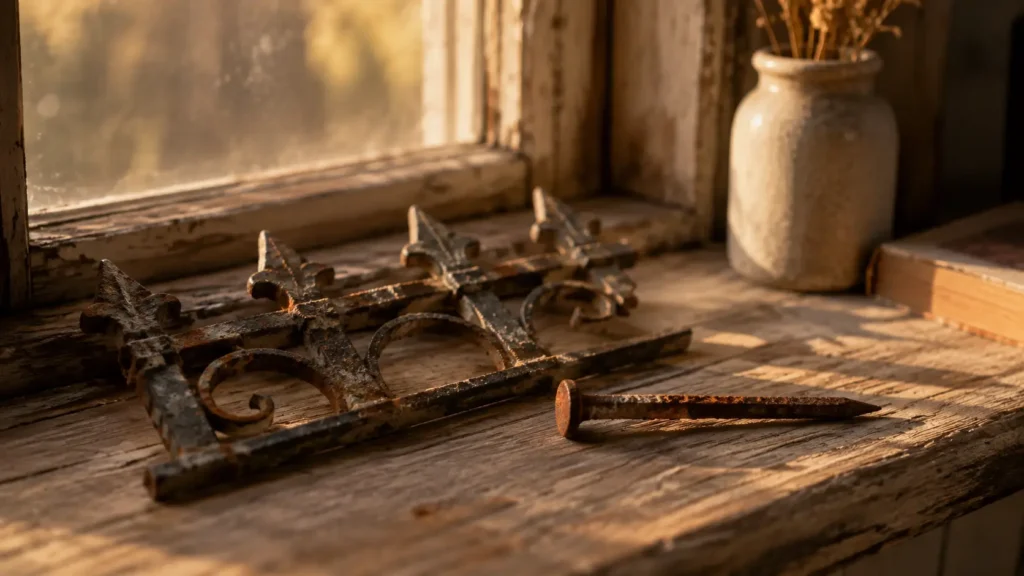
Rusting metal occurs when iron slowly reacts with water and oxygen over time.
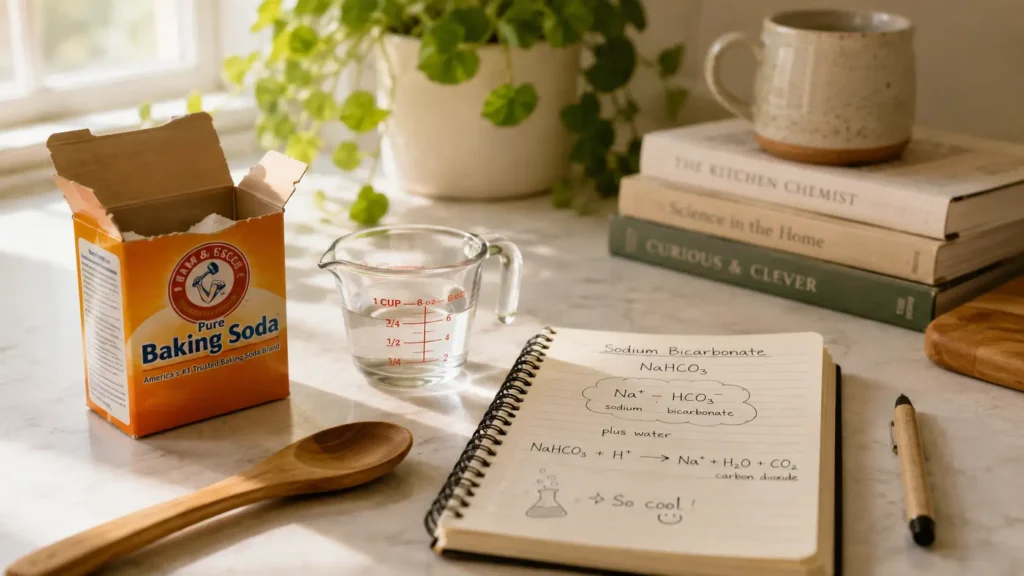
When baking soda and vinegar combine, they create carbon dioxide gas — the same reaction used to model volcanoes.
Digestion is a series of reactions that convert food into nutrients your body can use.
Plants use photosynthesis to produce food from sunlight, water, and carbon dioxide gas, releasing oxygen in the process.
Once you become aware of these patterns, it’s hard not to notice them. You aren’t just learning something new; you are learning to see what is already happening around you!
Discover Affordable Chemistry Experiments to Try at Home
If you want to do more than just read about the results and actually witness a reaction, you don’t need a laboratory — just a few household items.
Baking Soda + Vinegar Volcano: A classic and easy-to-clean activity where gas is generated.
The Rust Experiment: Leave an unused nail in a moist paper towel for a couple of days and observe how it rusts.
Boiled Red Cabbage: Changes color based on the pH of household liquids and serves as a simple pH indicator for a quick chemistry lesson.
In most of these experiments, you will use items found right in your kitchen. For those who want to purchase a comprehensive beginner science kit — particularly for homeschooling or keeping kids engaged during a school break — it is worth checking for sales, promo codes, or bundle deals before buying online. The back-to-school season often brings discounts on school supplies and science kits, making hands-on learning much more affordable.
Common Misconceptions About Chemical Reactions
A few myths continue to make people feel intimidated by this topic longer than necessary:
“Reactions Always Involve Fire or Danger”
In reality, most chemical reactions you see daily are completely safe and normal — there is no danger involved in cooking, digestion, or rusting!
“A Lab Is Needed to See One”
Chemical reactions take place daily in your kitchen and bathroom.
“It’s Too Much Trouble for Non-Scientists”
As this guide demonstrates, basic concepts can easily be understood through simple, plain-language explanations.
If chemistry felt too difficult in school, the problem wasn’t the subject itself — it was how it was presented. Without unnecessary jargon, the concepts are entirely accessible.
Final Thoughts
Remember one key takeaway from this guide: a chemical reaction is simply the rearrangement of atoms to create something new. No elements are lost or gained; the same elements are rearranged into new structures with new properties.
Understanding this doesn’t require a science degree or a large budget. With a little curiosity and a few household items, you can start seeing the world from a brand-new perspective. If you decide to purchase a science kit or homeschool materials, keep an eye out for seasonal sales so you don’t have to pay full price to keep learning.
The next time you smell bread baking, see rust on a fence, or watch bubbles form in a mixing bowl, you’ll know exactly what’s happening: a chemical reaction in plain sight.
Frequently Asked Questions
Is It Difficult to Understand Chemical Reactions Without a Science Background?
Not at all. As shown in this guide, core concepts can be understood using everyday examples without any formal scientific training.
How Can I Easily Remember the Main Types of Chemical Reactions?
Use familiar real-world examples: synthesis (water forming), decomposition (hydrogen peroxide splitting), combustion (a candle burning), and displacement (iron reacting with copper sulfate).
What Is the Difference Between a Chemical Reaction and a Physical Change?
Consider the LEGO or bread analogies: a physical change alters the form (like slicing bread), but the material remains the same. A chemical change alters the fundamental composition (like baking bread), creating a new substance that cannot easily be reversed.
Can I Safely Perform Chemical Reaction Experiments at Home?
Yes. Simple kitchen experiments using baking soda and vinegar, a rusting nail, or cabbage juice as a pH indicator are low-risk and beginner-friendly.