Volcanoes & Earthquakes: Earth’s Deep Power

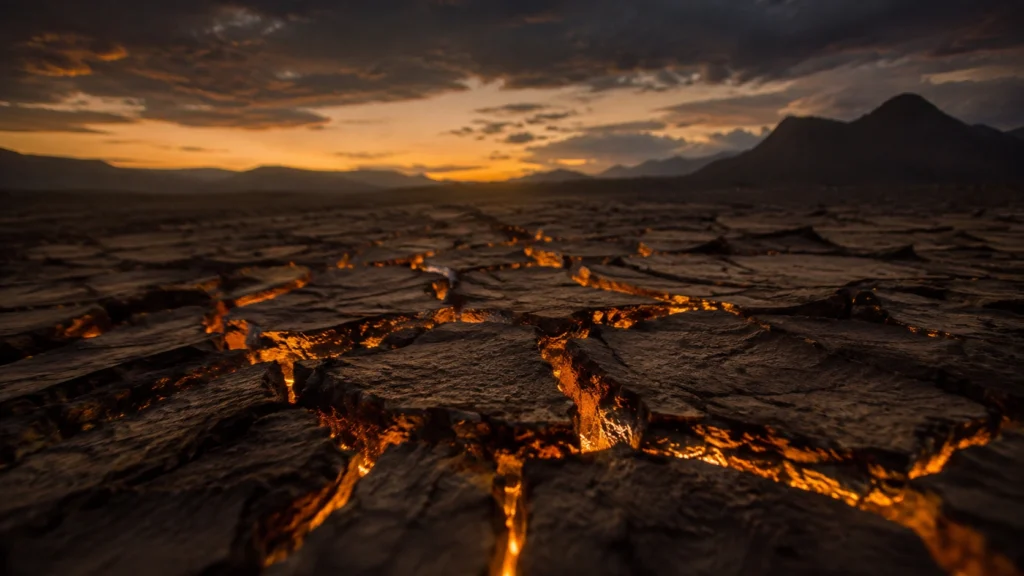
Every day, you see, is a quiet, ordinary day, but underneath it all, the earth is doing something special. It’s moving, grinding, accumulating pressure that we don’t really consider until it explodes as an earthquake rumble or as liquid rock erupts on the earth’s surface. Two of the most spectacular examples of the fact that our planet is not a still solid object are volcanoes and earthquakes. It’s alive, in a geologic sense, it’s moving at a very slow pace, and typically we don’t feel it — until we do!
This post explains how and why volcanoes form, and how they relate to earthquakes, what scientists and geologists know about predicting volcanoes and earthquakes today, and some of the really helpful and cost-friendly methods of being prepared if you live in an area where earthquakes and volcanoes are a possibility.
What Causes Earthquakes?
The best way to appreciate earthquakes is to imagine that the earth’s surface is not solid, but a cracked shell of gigantic plates (tectonic plates) that puzzle together around the whole globe. Almost imperceptibly slow (only a few centimeters per year, about the rate fingernails grow), these plates are continually sliding.
The issues begin at the borders, where these plates connect together, called fault lines. Plates can slide past each other, collide head-on or pull apart, and all of these interactions don’t proceed smoothly. The friction causes the plates to stick together for a while, putting lots of stress at the boundary. At some point, this stress breaks through the force between the plates, and the tension stored in the plates is released as seismic waves. The instant release is what is felt as an earthquake.
The area from which this slip originates is referred to as the hypocenter (also called the focus), and the point on the Earth’s surface directly above it is the epicenter — the point that is usually reported in earthquake media coverage.
What Triggers the Eruption of Volcanoes?
Unlike earthquakes, volcanoes operate in a completely different manner but they are frequently located in comparable tectonic settings. Under extreme pressure and heat, rock remains molten or partially molten underground, and is called magma. When the conditions are favorable, this magma squeezes its way up along cracks and weak areas in the crust.
As the magma rises, the pressure around it decreases and gases that are dissolved in the magma expand rapidly, much like opening a soda bottle. This expanding gas is frequently the force that causes an eruption, pushing molten rock, ash and gas up and out of a volcanic vent. The degree of thickness or thinness of the magma and how much gas is able to get trapped inside can influence the type of eruption, from slow steady lava flow to a high speed blast that can change the surrounding topography within a matter of minutes.
Is There Any Relation Between Volcanoes and Earthquakes?
That’s a valid inquiry and the truth is, sometimes, but not always. The two phenomena are closely linked to tectonic plate boundaries, which is why, for example, the Pacific Ring of Fire is a place where there is a lot of earthquakes and volcanoes. The same type of tectonic processes that allow plates to move past one another can also allow the magma to reach the surface in these areas.
Most of the earthquakes, however, occur with no volcanic activity at all, and most volcanic eruptions occur without any earthquake nearby. If it does occur, it is typically due to the movement of the magma itself (intrusion, uplift or pushing against rock), which creates smaller, localized earthquakes, called volcanic tremors. Such events are usually much smaller than tectonic quakes, which are one of the items that scientists use to try to predict when an eruption might occur.
The Way Experts Study and Monitor These Events
One of the most challenging things geologists are still working on is making a precise prediction of when and where an earthquake will occur. There is presently no way to accurately predict the exact time of an earthquake days or weeks ahead. Geologists are instead interested in the likelihood — based on previous seismic activity, the movement of fault lines and measurements of stress in the area — that the region will experience an event of more than usual magnitude over a longer period of time, but not at a specific time.
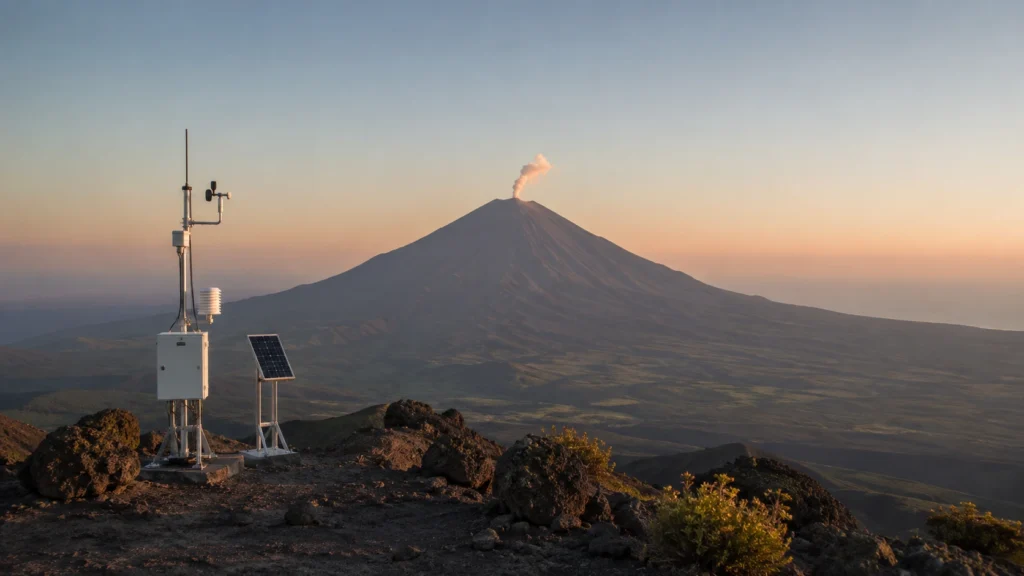
The volcanic activity, however, offers an opportunity for more advance warning, and in such a context, expert monitoring is particularly useful. Volcanologists use several instruments: seismographs for measuring the slight tremors that occur when magma is rising, gas sensors for measuring changes in sulfur dioxide and other gases, satellites to image the subtle movements of the ground as magma forces its way upward in the volcanoes, and thermal cameras to measure increases or decreases in surface temperatures. If several of these signals change simultaneously, it is usually considered a significant sign of an imminent eruption — although the precise time is not always predictable.
The consensus of geological scientists is that although they are not able at present to make a prediction for any one earthquake, volcanic monitoring has become more sophisticated and many communities at risk around the world receive advance warning to prevent disasters that would not have been possible a few decades ago.
Significant Events in History
A few volcanic eruptions and earthquakes have left such a mark on the earth that they have become permanent reference points in the scientific and historical records.
The eruption of Mount Vesuvius in 79 AD is one of the best documented volcanic eruptions of all time, as the city of Pompeii was preserved under layers of ash over a number of centuries. In recent times, the eruption of Mount St. Helens in the United States in 1980 changed the landscape dramatically, and was one of the first eruptions to be studied with the instrumentation that is now used to monitor all volcanic eruptions, both large and small.
On the other side of the equation, the earthquake of 1906 in San Francisco represented a paradigm shift in how cities think to plan buildings and infrastructure, and more recent, more substantial earthquakes continue to influence how engineers design structures to better resist earthquakes. One of the worst and most powerful earthquakes in recorded history was also the Tōhoku earthquake off Japan in 2011, which changed the world’s perspective on the potential for earthquake-induced secondary hazards such as tsunamis and led to increased investment in early-warning systems in coastal areas globally. While all these events occurred over many decades or even centuries apart, they all have played a direct role in the way in which these forces are known and prepared for today.
The Evidence That Suggests Preparedness
There’s one thing that all geologists and emergency management experts agree on: preparedness is more important than predicting the unpredictable. Early warning is usually not the main thrust for communities in high risk areas; they are typically encouraged to concentrate on resilient infrastructure, clear evacuation plans, and public education.
It’s the same with individuals, too, and households. The need for basic preparedness is consistently stressed, and not in terms of how much money you need to spend on specialized equipment, but rather, in terms of what you should do.
Planning for These Events Without Going Over Budget
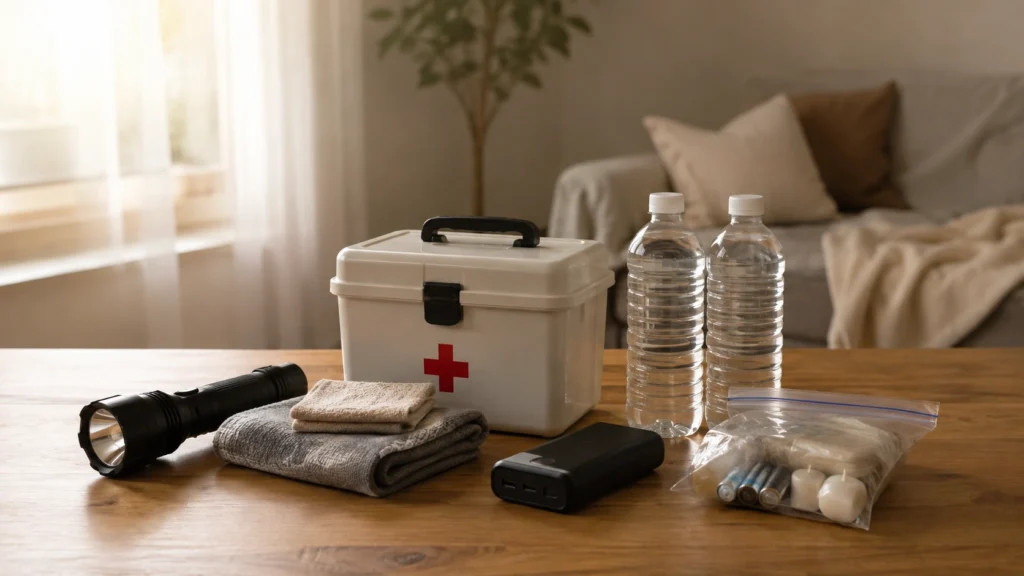
In an area susceptible to earthquakes or volcanic activity, one of the most important things you can do is purchase a basic emergency kit — it need not cost much. A working kit should contain a flashlight with extra batteries, a first aid kit, water, non-perishable food, a portable phone charger, and copies of important documents in an easily accessible place.
Instead of purchasing an expensive “disaster kit,” many of these items can be acquired one at a time, over time and at reasonable prices: visiting general retailing stores to see the sales on batteries, flashlights and first aid items; monitoring seasonal sales at hardware and outdoor stores; or simply using items already in your possession. Basic preparedness supplies also are often available at discounted prices around times of the year when there are natural disaster awareness campaigns, so it can be helpful to be alert to those times to help reduce the cost of building a kit over time.
An earthquake or evacuation plan in a household is not only free of cost in terms of money, but also in terms of time. There are many things a family can do — often more important than any single piece of equipment — to improve their chances of surviving an emergency, and they all know how to do that: they know which exits to use, where to meet if separated, and what utilities to turn off in case of an emergency.
The point is not to get into a panic — it’s to create a tiny, sensible buffer to serve as a fallback in case that ever happens, and the ground shifts or a nearby volcano awakens, and you’re not scrambling for basic supplies in real-time.
Conclusion
Two of the easiest reminders of the fact that the earth under our feet is anything but static are volcanoes and earthquakes. When people can understand how they are formed — shifting plates, rising magma, pressure finally released — they can start to give up the fear of the unknown and begin to understand how the planet works.
Although no one can predict the exact time an earthquake will happen, in recent decades, the scientific study and monitoring of earthquakes and volcanoes has become much more reliable than it used to be. A tiny bit of preparation is a worthwhile investment and, in many cases, can cost little more than one thinks, and can provide great peace of mind if someday, the ground under your feet reminds you just how powerful it is.
Frequently Asked Questions
What is the main cause of earthquakes?
When rocks in the Earth’s crust are under stress, they store that energy until the stress is finally released, causing an earthquake. Faults are areas where tectonic plates release pressure.
What causes a volcano to erupt?
The eruption usually occurs when the magma that has been rising is forced up the Earth’s crust by the expansion of the gases and molten rock once the pressure has been reduced.
Is there always a link between volcanic eruptions and earthquakes?
Not necessarily — although they are both frequently found on the same fault lines, the majority of earthquake events do not correspond to volcanic events, and the reverse is also true.
Is it possible for scientists to predict earthquakes?
Not with exactness, but only with a determination of probability over a period of time, as present science can do.Are volcanic eruptions more predictable than earthquakes?
Yes, in general, volcanic monitoring instruments, such as seismographs, gas monitoring devices, and satellite imagery, do offer useful, timely pre-eruption indications.