Hydrogen Fuel Cell Technology Explained

As you’re flipping through car ads, half paying attention to an energy news segment, or talking with a friend who just leased a car you’ve never heard of — there it is again — hydrogen fuel cell. Everybody is nodding along as though they “get it.” You don’t, and most people don’t either.
The great thing is, you don’t need to be a chemistry expert or a multi-million-dollar chemical company to understand this. Knowing about new technology is more or less the same as being an intentional, informed person in the world — just like checking the price before you purchase something, or reading the label before you buy a product. By the end of this guide, you’ll be able to explain what a hydrogen fuel cell is, how it works, and whether it’s something you need to pay attention to in your everyday life — whether that’s your next car, your energy bill, or just a conversation with someone.

What Is a Hydrogen Fuel Cell, Anyway?
Remove the science-fair jargon, and a hydrogen fuel cell is simply a machine that converts hydrogen gas into electricity.
Imagine that a standard battery — like the one in your cell phone or cordless drill — holds a certain amount of energy. Once it drains, it’s time to plug in and wait. A hydrogen fuel cell works differently. As long as you keep providing it with hydrogen, it will continue to generate electricity. It doesn’t “run down” the way a battery does — it just needs more fuel. It’s similar to a car with a gas tank: the car doesn’t stop working because the battery is “low,” it stops when the tank is empty.
It’s this one difference — continuous fuel versus stored charge — that unlocks nearly everything else in this guide.
Why does this matter beyond trivia? Hydrogen fuel cells come up in conversations about the future of cars, clean energy, and even residential and commercial backup electricity. Having a working mental model means you can follow the conversation, rather than nodding along and hoping no one asks a follow-up question.
How a Hydrogen Fuel Cell Works, Simply Explained
The process breaks down into simple steps, no periodic table required:
- Hydrogen goes in. Hydrogen gas is supplied to one side of the fuel cell.
- It’s split apart in a reaction. The hydrogen atoms are separated into electrons and protons.
- The electrons generate electric power. The electrons are pushed through a circuit — that movement of electrons is the electricity you use.
- Everything combines back with oxygen. On the other side, the protons and electrons combine with oxygen (usually pulled from the air), and the only byproduct is water.
That’s the whole idea: hydrogen and oxygen combine, electricity comes out, and water drips out the other end. It’s often described as running the water-splitting process in reverse — instead of using electricity to split water into hydrogen and oxygen, you’re combining hydrogen and oxygen to generate electricity.
The fuel cell itself has a thin membrane that only allows certain particles to pass through, sandwiched between two electrodes — but again, you don’t have to know all the parts to understand the concept. The important takeaway: fuel goes in, electricity and water come out, with no combustion and no exhaust fumes.
What’s the Difference Between Hydrogen Fuel Cells and Batteries?
This is likely the most useful comparison to carry around, because it’s the one that comes up again and again in conversations about EVs and clean energy.
Batteries have a fixed capacity for storing energy. You charge them up, use the stored energy, and then recharge — a process that can take anywhere from 20 minutes to several hours depending on the setup.
Hydrogen fuel cells don’t store energy the same way. They continuously convert fuel into electricity, and “refueling” with hydrogen — much like filling up a gas tank — takes just minutes.
Right now, batteries are what you’re actually using in everyday life, whether that’s your phone, your laptop, or most electric vehicles on the road. Hydrogen fuel cells are far less common in consumer vehicles today, partly because there are relatively few hydrogen refueling stations compared to the number of fuel pumps and charging stations already in place around the world.
For anyone who’s considered installing a home battery backup system — whether for power outages or general energy independence — it’s worth knowing that hydrogen-powered home backup is a relatively new, niche technology compared to what’s already on the market. When considering backup equipment, it’s usually worth watching for sales or seasonal price changes, since pricing on this type of equipment can shift throughout the year.
Where Will You Find Hydrogen Fuel Cells Today?
If hydrogen fuel cells aren’t in your garage, then where are they?
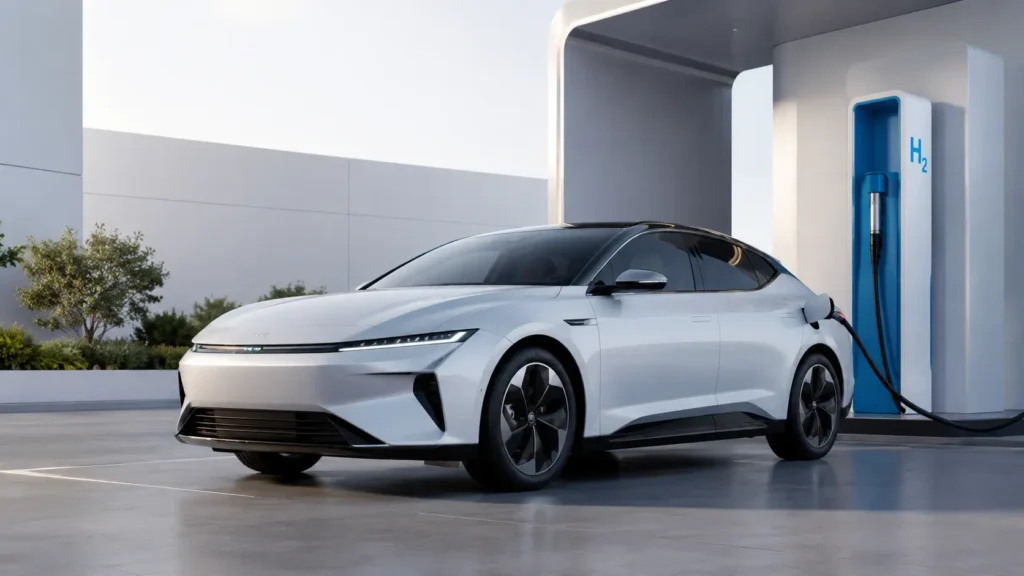
- Cars: A small number of hydrogen fuel cell vehicles exist today, mainly in areas where hydrogen refueling stations are already available.
- Public transport: Hydrogen-powered buses and trains are already operating in several cities as an alternative to diesel.
- Backup and industrial power: Hydrogen fuel cell units are used for backup power and to run heavy equipment in some warehouses, data centers, and facilities.
- Everyday consumer products: Still very limited — the technology hasn’t miniaturized or spread the way battery technology has.
In short, hydrogen fuel cells aren’t make-believe — they exist and are already in use, just not yet in the places most of us interact with technology every day.
The Honest Pros and Cons
No hype, no fear-mongering — just the balanced picture.
What’s Genuinely Promising
- Refueling is quick, closer to a gas station stop than a charging wait.
- The only byproduct is water — no tailpipe exhaust.
- The driving range of fuel cell vehicles is often strong compared to some battery electric vehicles.
What Still Needs Work
- Refueling infrastructure exists in only a few regions.
- Producing hydrogen takes energy, and how “clean” that production is depends heavily on the method used.
- Overall efficiency is still debated among engineers, since some energy is lost at each step of the process.
Neither side of this story is the complete picture on its own — which is exactly what makes it worth understanding both.
Misconceptions About Hydrogen Fuel Cells, Explained
Myth: “Hydrogen cars are basically car bombs.” Reality: Vehicles that run on hydrogen fuel are designed and tested with the same rigorous standards as gasoline- and battery-powered vehicles. Unlike a liquid fuel spill, which can pool and create a hazard, hydrogen disperses quickly into the air — which is actually a safety advantage in some situations.
Myth: “Hydrogen is a completely clean fuel with no trade-offs.” Reality: The vehicle itself doesn’t emit anything, but how the hydrogen is produced matters a great deal. Some production methods rely on fossil fuels, while others use renewable energy — so “clean hydrogen” isn’t a single, fixed answer.
Myth: “This technology is still many years away.” Reality: It’s already in use today in buses, industrial settings, and select vehicle markets. Not science fiction, but not mainstream either.
Will You See Hydrogen Fuel Cell Technology in Your Future?
In the coming years, hydrogen fuel cells are expected to keep growing in public transport, heavy-duty trucking, and industrial sectors, where fast refueling and long range matter more than they do for a typical daily commute.
For most everyday readers, this technology probably won’t show up in your driveway anytime soon. But it can affect you indirectly — through public transit upgrades in your city, an energy decision at your workplace, or the broader shift toward cleaner transportation.
While hydrogen vehicles aren’t widely available to shop for, the same smart-shopping habit applies here as with any major clean-vehicle purchase: compare prices across a few retailers or dealerships, and check for current rebates, incentives, or seasonal promotions before committing.
The lesson here isn’t urgency — it’s curiosity. There’s no need to take action right now. It’s enough to understand it well enough to make good decisions when it does become relevant to you.

Conclusion
Hydrogen fuel cells may sound like complicated technology, but they’re not. Hydrogen goes into a fuel cell, a simple chemical reaction occurs, and electricity and water come out. That’s really the essence of it, underneath all the technical language.
This isn’t magic technology or science-fiction hype — it’s a viable, proven alternative with clear advantages and real limitations, already quietly powering buses, backup generators, and a small number of vehicles today.
Understanding things like this is a quiet way of living with intention. There’s no need to buy anything or change your habits to benefit from knowing it — the next time you hear about it, read about it, or think it through, you’ll simply feel a little more confident.
FAQ
Are hydrogen fuel cell cars available to buy right now? Availability is still very limited — only in a few regions where refueling stations already exist — compared to gas stations or battery-electric charging.
Are hydrogen fuel cell cars safer than gas-powered cars? Hydrogen vehicles go through the same rigorous safety testing as all other vehicle types, and hydrogen’s ability to disperse quickly in open air is considered an advantage in some situations.
How is hydrogen fuel actually produced? It depends on the method — some rely on fossil fuels, while others use renewable energy, which is why “clean hydrogen” varies case by case.
Will hydrogen fuel cells replace electric batteries? Most experts expect the two to coexist — batteries for local and shorter trips, hydrogen for long-distance and heavy-duty use.
Is this technology worth knowing about if I’m not buying a vehicle? Yes — even if you never buy a hydrogen-powered product, understanding new energy technology is a form of financial and consumer literacy.