Flying Car Tech Dream Becomes Real

Have you ever been stuck in bumper-to-bumper traffic, watching a delivery drone glide overhead, and wished you could just fly over it all? You’re not alone — for most of us, that’s always felt like the stuff of dreams rather than real life. But in 2026, the gap between fantasy and reality is slowly starting to narrow.
You don’t need a $300,000 flying car in your driveway to benefit from this trend. Understanding where the technology is actually headed gives you the knowledge to make smarter choices about the tech and gadgets you use today. In this post, I’ll break down what’s real, what’s still hype, what it costs, and when — if ever — flying cars might become part of everyday life.
Are Flying Cars Real? A 2026 Reality Check
For years, flying car announcements followed the same pattern: a slick concept video, a flurry of press coverage, and then, a few years later, silence. That pattern is finally breaking. Flying car technology has moved from concept art and prototypes to actual production lines in 2026, and the clearest example of that shift is Alef Aeronautics.
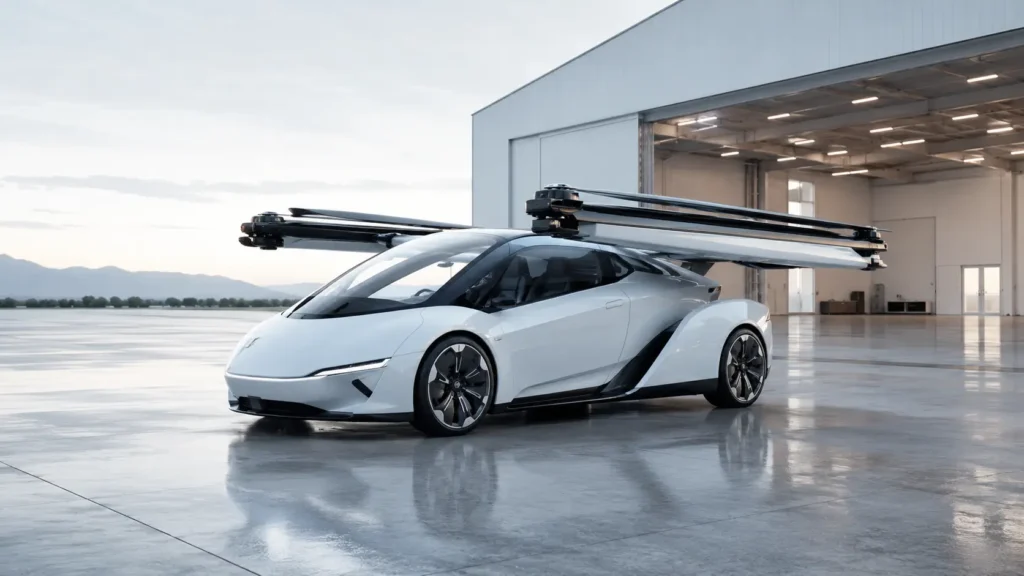
The California-based startup has begun hand-assembling its Model A Ultralight at its San Mateo facility, with early units reaching customers through 2026. Alef describes it as the first vehicle that’s both road-legal and capable of vertical takeoff and landing — meaning it can drive on public roads and lift straight into the air without needing a runway.
It’s a genuinely meaningful milestone, but it’s worth being precise about what it actually means. “In production” is not the same as “available to the public.” These early cars are going to a small, select group of customers for real-world testing under tightly controlled conditions. In other words, this isn’t a car you can order like a new Toyota — it’s beta testing for a very expensive experimental mode of transportation. These vehicles are currently approved for demonstration and research flights only, so don’t expect to see one weaving through midday traffic anytime soon.
The Technology Making Flight Possible
So what actually changed to make this possible after so many false starts? It isn’t one dramatic invention — it’s the convergence of several familiar technologies maturing at the same time.
At the center of it is what engineers call distributed electric propulsion. Instead of relying on one large, powerful engine, these vehicles use multiple small, quiet electric motors working together. Think of it as trading one loud engine for a coordinated team of quiet ones — if one falters, the others can compensate, making the whole system inherently safer.
Battery technology is the second key piece. While range remains a limiting factor, today’s lithium-ion batteries can safely support a 20- to 50-mile urban flight with a healthy safety margin — enough to cover the vast majority of the short city routes these vehicles are designed for.
Fly-by-wire flight controls matter just as much. Rather than a pilot manually adjusting a mechanical lever, an onboard computer interprets their input and translates it into thousands of small, precise motor adjustments. This makes the aircraft remarkably stable and far easier to fly than older aviation systems, which could eventually lower training barriers.
Finally, lightweight carbon fiber composites keep these vehicles strong without adding unnecessary weight — every pound saved translates directly into more range or more payload capacity. It’s the same kind of battery and electric-motor innovation that has been gradually improving the efficiency and affordability of everyday EVs, e-bikes, and smart-home gadgets over the past several years.
Personal Flying Cars vs. Air Taxis: Which Is Closer to Reality?
It’s worth clearly separating two categories that often get lumped together: personal flying cars, like Alef’s Model A, and air taxis — also known as eVTOL aircraft (electric vertical takeoff and landing). Personal flying cars are individually owned, while air taxis operate more like a shared, on-demand flying rideshare service.
Right now, the air taxi model is significantly closer to real-world scale. Volocopter, a German company, has spent over a decade developing multirotor aircraft with built-in motor redundancy for safety. Vertical Aerospace has logged thousands of test flights and attracted serious investment from the aerospace and technology sectors. Wisk Aero, backed by a major aerospace manufacturer, is working toward fully autonomous air taxis that wouldn’t require an onboard pilot at all.
Much of this isn’t theoretical anymore, either — Joby Aviation has signed a multi-year deal to launch commercial air taxi service in a major Middle Eastern city, and operators in parts of China are already running short, autonomous sightseeing flights for the public. Most industry analysts agree that fleet-based air taxi networks are the more realistic near-term path to scale, largely because the capital and regulatory requirements are lower than personal ownership demands.
How Much Does It Cost to Own a Flying Car?
If you’re picturing flying cars becoming a realistic purchase anytime soon, the price tag brings you back down to earth quickly. Personal models like the Alef Model A currently sell for around $300,000, with more advanced or luxury variants reaching well over $1 million. Across the broader market, early personal flying vehicles range from roughly $150,000 to over $1 million, depending on the manufacturer and specifications.
That cost comes from several places: each vehicle is largely hand-built using composite-intensive manufacturing that can take months per unit, plus the extensive testing and safety certification required just to get near approval. For now, it makes far more sense to think of these vehicles as luxury or collector’s items rather than practical commuter transportation — closer to a limited-run supercar than a Honda Civic.
If a flying car obviously isn’t in your 2026 budget, that’s not really a loss. The same underlying battery and EV technology is already trickling down into more affordable everyday products, so keeping an eye out for deals on EV accessories, smart-home gadgets, and efficient electronics is a far more realistic way to benefit from this wave of innovation right now.

The Obstacles Standing in the Way of Everyone Flying to Work
Engineering progress is only half the story — regulation and infrastructure make up the other, slower-moving half. Aviation authorities like the FAA have only cleared vehicles like Alef’s for demonstration and research flights, not everyday commuting, and building a full certification framework for routine passenger flights takes time. Other countries are following a similar pattern: regulators in Australia, for example, are actively developing their own certification framework, with initial trials expected to trail U.S. and European programs by a year or more.
Beyond paperwork, cities themselves aren’t ready either. Widespread flying car or air taxi use would require dedicated takeoff and landing zones, new charging infrastructure, and air traffic coordination systems that mostly don’t exist yet. None of this is a reason for pessimism — it’s simply a reminder that the technology is currently outpacing the systems needed to support it safely at scale, which is exactly why cautious, phased rollouts make sense.
What This Means for the Future of Transportation
Putting it all together, the most likely path forward looks like this: air taxi services launch in a handful of major cities first, offering short, point-to-point flights as a premium alternative to ground transportation. Personal flying car ownership, meanwhile, stays a niche, high-cost category for a long while afterward, gradually becoming more accessible as manufacturing scales and certification catches up.
In the meantime, the most useful thing you can do as a reader isn’t to chase every flashy “future tech” product riding this wave. Novelty gadgets and merchandise marketed around the flying car craze tend to be overpriced for what they actually deliver. Before buying into anything in the “future tech” category, treat it like any major purchase — compare prices, read genuine reviews, and check that it isn’t simply being sold at an inflated price because it feels futuristic.
Conclusion
Flying car technology has genuinely crossed a threshold in 2026, moving from concept drawings and prototypes into real production lines and early customer deliveries. Still, this is very much the early-adopter chapter of the story — think experimental beta testing at a luxury price point, not a replacement for your daily commute. Air taxis are the more realistic near-term development to watch, while personal flying car ownership will likely remain a rare, high-cost novelty for years to come.
None of this means you need to overspend to stay engaged with where technology is headed. Smart living isn’t about chasing the latest and greatest gadget — it’s about being informed, curious, and intentional. Enjoy watching this industry evolve, and when it comes to your own tech and lifestyle upgrades today, invest in what actually fits your life and your budget, not what simply feels exciting in the moment.
FAQ
Can I buy a flying car right now?
Not really — availability is extremely limited, prices are high, and units are currently going to early testing customers rather than the general public.
How much will a flying car cost in 2026?
Prices currently range from around $150,000 to over $1 million, driven mainly by hand-assembly, advanced materials, and certification costs.
What’s the difference between a flying car and an air taxi?
A flying car is a privately owned vehicle capable of both driving and flying, while an air taxi is a shared, on-demand flying rideshare service you use rather than own.
When will flying cars be available to the public?
There’s no official timeline — infrastructure and regulation are developing more slowly than the underlying technology itself.
Is it safe to fly in an eVTOL aircraft?
These aircraft include safety-focused features like redundant motors and computer-assisted fly-by-wire controls, though large-scale, real-world safety data is still developing.