3D Printing Technology: The Future Outlook and Why It Matters

A few years back, 3D printing was largely a hobbyist activity, used by tech enthusiasts to make small plastic toys in their garages. The same technology is now being used to print entire houses, manufacture parts for airplanes, and even create new human tissue in medical research labs. What began as a novelty has steadily grown into a genuine game-changer for manufacturing, and the trend is opening the door to even more significant changes ahead.
This guide breaks down where 3D printing technology is really headed, what’s accelerating its growth, and why it matters well beyond its original hobbyist roots.
What 3D Printing Actually Is
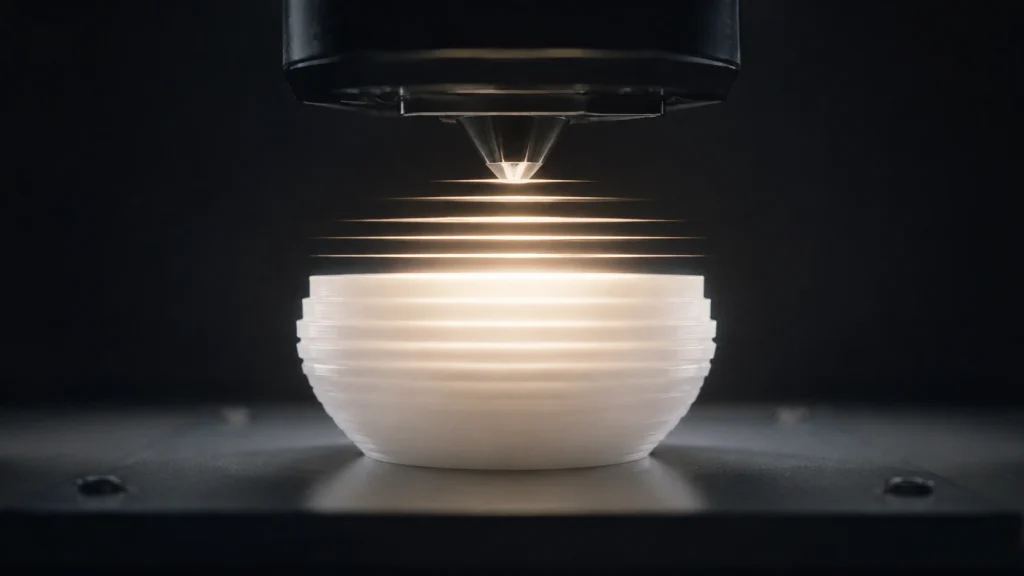
At its core, 3D printing — also known as additive manufacturing — is the process of creating physical objects layer by layer from a digital design file. This differs fundamentally from traditional manufacturing, which generally involves removing material from a larger block rather than adding it.
This distinction is part of what gives 3D printing its unique advantages. It enables the creation of complex geometries that would be difficult to produce using traditional manufacturing methods, minimizes material waste (since little to no material is cut away and discarded), and makes small-batch or fully custom production far more practical and cost-effective than traditional manufacturing typically allows.
The Evolution of 3D Printing Technology
Early 3D printers could only work with plastic and produced relatively simple structures, often with visible layer lines and limited structural strength. Over time, however, the range of materials suitable for 3D printing has expanded considerably, now including various metals, ceramics, composites, and even specialized biological materials used in medical research.
Printing speed and accuracy have also improved significantly, allowing for more complex objects to be produced with greater precision and structural integrity than earlier generations of the technology could achieve in the same amount of time. These gradual improvements have steadily shifted 3D printing from prototyping and hobbyist projects toward genuine, useful production across a range of industries.
Where 3D Printing Is Making the Biggest Impact Today
Manufacturing and Industrial Production
Across sectors like aerospace and automotive, 3D printing has become a valuable way to manufacture parts that would otherwise be difficult or costly to produce using conventional methods — particularly lightweight, structurally optimized components that can meaningfully improve overall product performance. It’s also increasingly used to manufacture specialized tools, jigs, and fixtures for larger manufacturing processes, sometimes at lower cost and faster speeds than traditional tool production allows.
Healthcare and Medicine
One of the most exciting, longer-term prospects for 3D printing is its use in medicine. Custom prosthetics and orthotics can now be made to fit a patient’s exact measurements, offering a far better fit than mass-produced alternatives. Using a patient’s imaging data, surgeons can create 3D anatomical models to plan complex surgeries in advance, improving outcomes and reducing time spent in the operating room. Research is also progressing on 3D-printed biological tissue, known as bioprinting, as scientists work toward eventually printing functioning tissue — a potential next frontier for medical applications.
Dentistry has also become one of the more practical current uses of 3D printing in medicine, with 3D-printed custom crowns, aligners, and dental models becoming increasingly common in place of handcrafted alternatives. This shift has meaningfully reduced the time and cost associated with certain dental treatments, offering a concrete, real-world example of 3D printing’s impact beyond experimental research.
Construction and Architecture
3D printing technology is being used more and more in construction, with specialized printers now capable of printing entire structures — from walls to small buildings — much faster than conventional building techniques allow. This approach holds particular promise for addressing housing shortages or providing quick, low-cost construction in emergency housing situations.
Consumer Products and Customization
Beyond industry and medicine, 3D printing’s potential continues to grow in consumer products, enabling highly customized goods such as personalized jewelry and made-to-fit items. This makes truly individualized products achievable at a scale and price point that traditional mass manufacturing — built around standardized, uniform production — simply couldn’t match.
Why 3D Printing Technology Is Advancing So Quickly
The 3D printing industry continues to see rapid advancement due to several converging factors. The range of what can be printed keeps expanding as new materials emerge, including more durable, robust plastics and increasingly sophisticated metal alloys capable of handling demanding industrial applications.
Printer precision and speed also continue to improve, further reducing production time while enhancing the quality and consistency of printed objects. As software tools grow more advanced — particularly more powerful design tools and increasingly capable AI-driven design optimization — it’s becoming easier to design specifically for the unique advantages 3D printing offers, rather than simply adapting designs originally created for traditional manufacturing methods.
The Economic Case for Continued Growth
Beyond the technical advances, 3D printing’s continued growth is also driven by real economic benefits in certain situations. It can be significantly more cost-effective than conventional manufacturing for low-volume production runs or highly customized products.
There are also meaningful benefits to producing one-off, locally-manufactured products or replacement parts using 3D printing, which can reduce the need for large stockpiles or long-distance shipping. This is especially valuable for businesses with complex supply chains, where the ability to manufacture specific parts exactly when and where they’re needed can cut costs and delays compared to traditional, centralized production and shipping models.
This on-demand manufacturing capability also has practical value for industries maintaining legacy equipment, where replacement parts for older machines aren’t always produced through conventional means. Rather than hunting down increasingly rare original parts, or scrapping otherwise functional equipment simply because parts are unavailable, 3D printing offers a genuine solution to keeping such equipment operational.
Real-World Challenges Facing 3D Printing’s Future
Despite the encouraging outlook, several significant challenges remain that will shape how quickly 3D printing grows and how broadly it can be adopted. While the technology continues to improve, its printing speed generally can’t match the volume output of traditional mass manufacturing for standard products, making 3D printing better suited to specific applications than a wholesale replacement for other manufacturing methods.
In some cases, material costs for more specialized 3D printing applications — such as advanced metal printing — remain significantly higher than traditional manufacturing materials. There are also ongoing concerns about scaling consistent quality control, particularly in safety-critical fields like aerospace and medical device manufacturing, where rigorous testing and certification remain essential regardless of how a part was originally manufactured.
Common Misconceptions About 3D Printing’s Future
Several common misconceptions about 3D printing persist, and most of them fail to capture a genuinely nuanced picture.
One popular myth is that 3D printing will eventually replace traditional manufacturing entirely. In reality, most industry professionals view it as complementary — well-suited to applications like customization, complex geometries, and low-volume production, but not a replacement for high-volume traditional manufacturing. Another common belief is that 3D printing can only produce simple plastic items. In practice, the technology now works with a wide range of materials, including metals, ceramics, and even biological materials used in specialized medical research. A further misconception is that 3D printing remains too expensive for practical use. While certain specialized applications do carry meaningful costs, consumer and small-business 3D printing has become far more affordable and accessible in recent years.
The Future of 3D Printing Technology
Looking ahead, several trends are expected to shape the continued development of 3D printing. Printing speeds will likely keep improving, increasingly narrowing the gap with traditional manufacturing for certain medium-volume production use cases. Continued advances in materials science should further expand the range of materials suitable for reliable 3D printing, potentially unlocking new applications that aren’t currently possible.
Bioprinting remains one of the more closely watched areas of future development — advances here could eventually lead to functional printed tissue for medical use, though fully printed, transplantable organs remain a much more distant goal than nearer-term tissue applications. As AI-assisted design tools continue to evolve, we can also expect more complex, automatically optimized designs built specifically to take advantage of what 3D printing uniquely offers, rather than simply adapting designs originally created for other manufacturing methods.

Final Thoughts
What began as a hobbyist pursuit has come a long way, steadily establishing itself as a genuine force in manufacturing, healthcare, construction, and consumer products. 3D printing isn’t replacing traditional manufacturing — it’s carving out a niche where it adds real value, particularly around customization, complexity, and localized, on-demand production.
As materials science, printing speed, and design software continue to advance together, 3D printing is well positioned to keep pushing its practical boundaries across many industries — driving an impactful, if gradual, shift in how physical objects, from everyday goods to intricate medical devices, are designed and made.
Frequently Asked Questions
Will 3D printing eventually replace conventional manufacturing?
Not entirely. Most experts view 3D printing as a complement to traditional manufacturing methods, particularly well-suited to product customization, complex designs, and low-volume production.
What materials can today’s 3D printers use?
Modern 3D printers work with a wide variety of materials, including plastic, metal, ceramics, composites, and even biological materials used in specialized medical research.
How is 3D printing currently used in healthcare?
Common medical applications include custom prosthetics and orthotics, patient-specific anatomical models for surgical planning, and ongoing development of bioprinting for functional tissue.
Is 3D printing technology still too expensive for practical use?
Not necessarily. While some specialized applications carry meaningful costs, 3D printing technology available to consumers and small businesses has become significantly more affordable and accessible in recent years.
What’s considered the most promising future application of 3D printing?
Bioprinting — the printing of functional biological tissue — is currently one of the most closely watched research areas, with major long-term implications for regenerative medicine.