Metaverse Tech Latest Discoveries Explained

Although the metaverse has been in the spotlight for the past few years, it was primarily talked about as an exciting virtual reality world, digital real estate, and a lot of hype. That picture looks quite different today. Over the course of 2026, metaverse technology has shifted from being an experimental novelty into a practical tool companies use to address real-world problems in their operations, train employees, and showcase products.
This guide outlines the most important recent developments in metaverse technology in plain terms, and what they tell us about where the metaverse is headed.
The Journey From Hype to Real-World, Enterprise-Focused Use
If there’s one thing that’s changed the most this year in metaverse technology, it’s who is building it — and why. The metaverse is no longer just a digital trend; it’s become a component of broader digital transformation initiatives across a range of industries, working alongside AI, cloud computing, and data analytics to deliver experiences far more interactive and useful than the more experimental virtual worlds of earlier years.
Rather than focusing on flashy digital spaces, businesses are increasingly investing in immersive environments designed to solve real-world problems — whether as training simulations, virtual product showcases, or enhanced customer engagement tools. This shift toward genuine utility rather than novelty reflects the technology’s maturing and its growing adoption by mainstream business.
Virtual Worlds Are Transforming Further in an AI-Driven Era
One of the most significant recent advancements in metaverse technology is the close integration of AI within virtual worlds. AI is now enhancing the capabilities of avatars, enabling more natural and realistic facial expressions, gestures, and emotions, making virtual interactions feel far more lifelike than earlier, less expressive avatar generations.
Generative AI is also helping build virtual environments, supporting the creation of more intelligent, responsive NPCs, more dynamic environments, and far more efficient content creation tools. AI-driven content creation is making it possible to build increasingly complex and detailed spaces much more efficiently than manual content creation ever allowed.
Digital Twins Have Become a Key Industrial Application
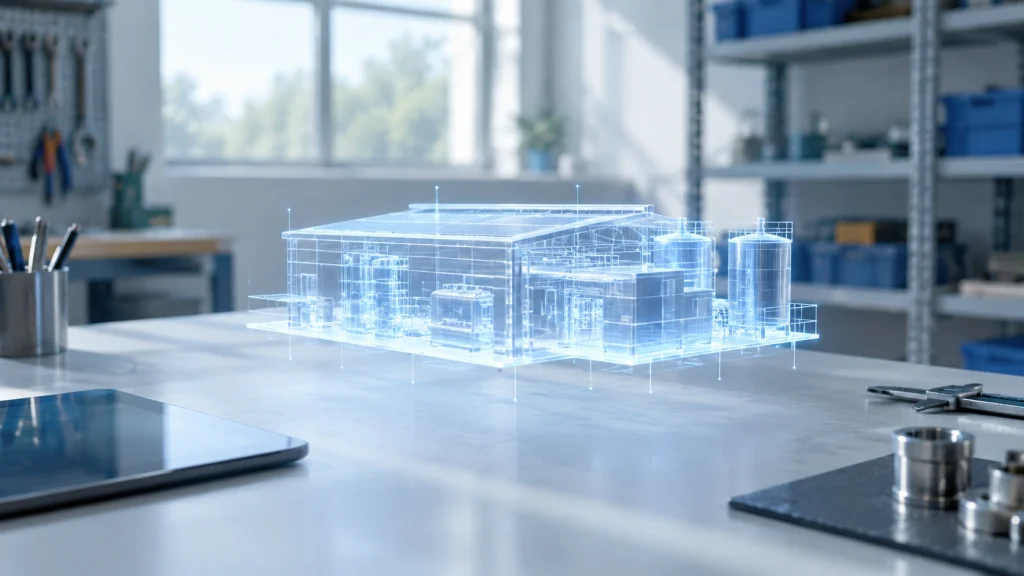
Perhaps one of the most practically relevant developments adjacent to the metaverse is the digital twin — a highly detailed virtual replica of an object, system, or entire facility, used for simulation, testing, and planning. Digital twins have become a core part of designing, developing, and operating industrial products and manufacturing processes, as industrial platforms specifically built for creating digital twins have proliferated, growing in importance across manufacturing, construction, and industrial design, and enabling companies to simulate and test changes in a virtual environment before implementing them in the real world.
This is a particularly compelling example of metaverse technology delivering real value and utility for businesses, since it allows companies to identify potential issues, experiment with different configurations, and make significant process improvements far faster and more safely than they could through real-world trial and error.
These applications rely on industrial platforms built on sophisticated GPU rendering capabilities and standardized 3D scene description frameworks, giving manufacturers, construction companies, and other industrial users the technical means to build accurate, genuinely useful digital twins at scale. This kind of infrastructure investment signals a serious approach to metaverse-related technology by major industry players, rather than treating it as an experimental novelty.
Hardware Is Becoming Lighter, More Comfortable, and More Capable
As for widespread metaverse adoption, the hardware needed to access immersive spaces in 2026 has clearly moved toward lighter, more comfortable, and increasingly wireless VR and AR headsets. Advances in display technology, processing power, and battery efficiency are steadily lowering the physical barriers to entry for extended immersive use.
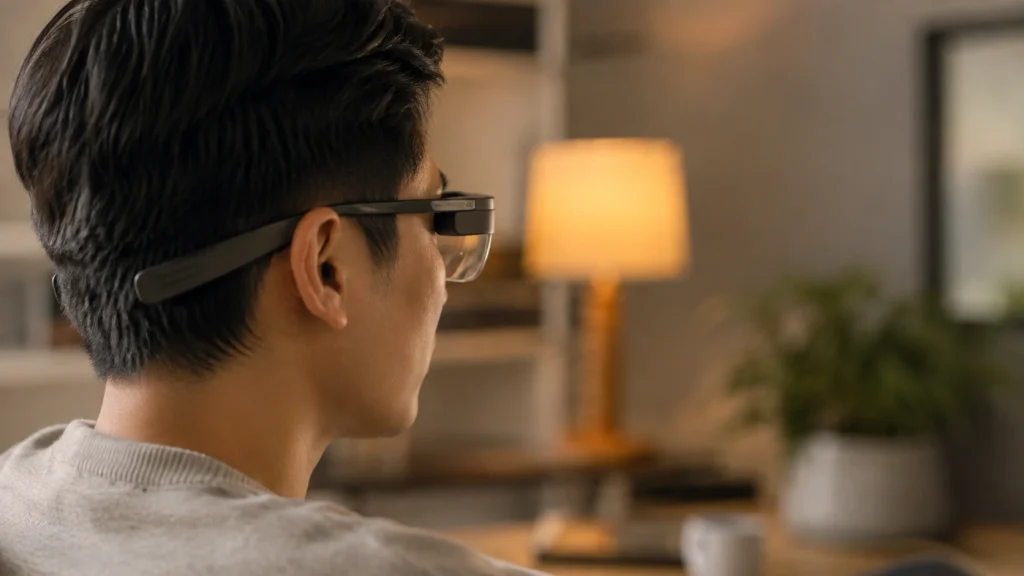
Alongside other hardware innovations entering this new era, smart glasses have become a more prominent part of the market, offering a subtler, more socially acceptable alternative to wearable VR headsets for certain AR applications. Major technology firms continue to invest heavily in this category of hardware, particularly lightweight devices designed to be worn all day, which could serve as a bridge between today’s smartphone-centric computing world and a more fully immersive computing future.
What’s become clear is that this hardware-focused approach remains a strong emphasis this year, with VR companies showcasing innovations spanning AI, smart glasses, wearables, and the future of computing more broadly — not treating VR headsets as the only path to digital immersion. This more comprehensive hardware ecosystem reflects growing recognition that different devices suit different use cases, rather than any single, one-size-fits-all solution for the metaverse.
Blockchain and Digital Ownership Remain Active in the Space
Blockchain technology has remained a significant player in metaverse development this year, even as blockchain-based virtual worlds have gone through a degree of correction compared to previous years. While the metaverse’s promise to fully revolutionize digital spaces is still unfolding, blockchain technology is already proving its value in other aspects of virtual environments — including digital ownership verification, secure transactions, and ensuring the integrity of data used to train AI models.
Existing virtual world and blockchain-based digital economy platforms continue to expand their partnerships with brands and organizations worldwide, diversifying beyond the Web3 niche into more commercially relevant, and in some regions even governmental, applications.
Spatial Computing Is Emerging as the Overarching Framework
The metaverse in 2026 isn’t a single, standalone technology. Industry experts increasingly view it as the integration of multiple distinct technologies working together: extended reality interfaces, AI-powered intelligence, blockchain-based trust and ownership, and cloud and edge computing infrastructure capable of reliably delivering complex, real-time virtual experiences at scale.
This broader concept is often referred to as “spatial computing” — a more technically grounded understanding of what’s actually possible and useful in immersive virtual worlds, moving beyond the metaverse’s earlier, narrower association with virtual reality goggles.
Early Experiments in Neural Interface Integration
Among the more future-oriented developments being explored is early testing of neural interface technology — systems that would allow people to interact directly with virtual environments without physical controllers. These explorations remain early-stage research rather than a widely available practical technology, but they signal the industry’s interest in closing the physical gap between people and more immersive digital experiences.
This kind of research is unlikely to have any immediate impact on mainstream, practical applications, but it illustrates how a range of metaverse-adjacent technologies are moving toward more natural, seamless ways of interacting with virtual worlds, beyond today’s controller- and gesture-based methods.
Security and Privacy Are Becoming Core Values, Not Afterthoughts
Access control and security are no longer an afterthought in metaverse environments — they’ve become critical platform requirements, especially as sensitive business interactions, personal user information, and financial transactions increasingly take place within these spaces. Strong authentication systems, biometric data protection, and clear privacy policies are now seen as integral components of platform infrastructure, rather than features tacked on after the fact.
This emphasis on security and governance aligns with the metaverse’s broader shift from an early-stage technology into genuine business infrastructure, since platforms handling serious financial and personal information naturally require far higher security and compliance standards than earlier, more recreational metaverse platforms did.
This transition also has implications for how platforms are designed from the ground up. There’s a growing recognition that privacy-by-design principles and clear, transparent data policies should be built into the core of platform infrastructure from the start, rather than layered on after core functionality has already been developed — as was often the case with earlier generations of digital platforms, where security and privacy weren’t treated as first priorities.
Common Misconceptions About Metaverse Technology
Several misconceptions about the metaverse persist, most of them rooted in an outdated view of where the technology actually stands.
One common myth is that the metaverse is primarily about buying and speculating on virtual real estate. In reality, the metaverse’s growth is increasingly driven by useful enterprise applications — employee training, digital twins, and product visualization — much of it developing largely independent of earlier real estate speculation trends. Another misconception is that participating in the metaverse requires wearing a large, cumbersome VR headset. In fact, the field is steadily opening up to a much wider range of hardware, from smart glasses weighing just a few grams to browser-based experiences and full immersive VR. A further common assumption is that the metaverse is a single, shared virtual environment. In reality, it isn’t one unified virtual universe at all, but rather a collection of distinct platforms and experiences, built on different underlying technologies by different companies.
Final Thoughts
The metaverse has come a long way from its early days as a hype- and speculation-driven trend centered on virtual real estate and futuristic social spaces. The technology continues to evolve — from AI-powered avatars and industrial digital twins to new hardware, blockchain-based ownership models, and expanding security frameworks — steadily progressing toward becoming genuine business and industrial infrastructure.
As spatial computing continues to bring these technologies together into a more complete, technically sound framework, the metaverse appears well positioned to become a practical reality for businesses in training, design, and customer interaction — though that shift is likely to be a gradual, ongoing evolution rather than a dramatic, overnight transformation.

Frequently Asked Questions
Is virtual real estate and gaming still the main driver of the metaverse?
Not primarily anymore. Most of the metaverse’s current growth is centered on real-world enterprise use cases, such as training, product visualization, and industrial digital twins.
How is artificial intelligence being applied in metaverse technology?
AI is enabling more expressive and realistic avatars, supporting the creation of dynamic virtual environments, and improving the efficiency of content creation, making immersive experiences both more realistic and faster to build.
What is a digital twin, and how does it relate to the metaverse?
A digital twin is a virtual replica of a real-world object or system that can be simulated and tested, and it’s one of the metaverse’s more practically valuable industrial applications.
Is a VR headset always required to experience the metaverse?
No. As the field expands to include lighter options like smart glasses and browser-based experiences, access now extends well beyond fully immersive VR headsets.
Does a single, unified metaverse exist today?
No. Rather than one unified digital universe, the metaverse currently consists of a collection of separate platforms, built on different technologies by different companies.