How Smart Farming Helps Farmers Feed Us

Feeding a growing global population while dealing with unpredictable weather, limited water resources, and rising costs is one of modern agriculture’s biggest challenges. Increasingly, farmers are turning to technology to help meet that challenge, using sensors, satellite data, automation, and software to grow more food more efficiently than traditional farming methods alone typically allow. This approach is often referred to as smart farming, or agricultural technology, commonly shortened to agri-tech.
This guide breaks down what smart farming actually is, how it works, and why it’s playing an increasingly important role in how food reaches our tables.
What Smart Farming Actually Means
Smart farming refers to the use of modern technology, including sensors, data analysis, automation, and connected devices, to make agricultural practices more precise, efficient, and responsive to real-time conditions. Rather than relying purely on tradition, experience, and generalized practices across an entire field, smart farming allows farmers to make more targeted decisions based on actual, current data about their soil, crops, and environment.
This broader concept is often referred to as precision agriculture, since a defining feature of smart farming is precision, applying exactly the right amount of water, fertilizer, or pest control to exactly the right location, rather than treating an entire field uniformly regardless of variation within it.
The Core Technologies Behind Smart Farming
Sensors That Monitor Soil and Crop Conditions
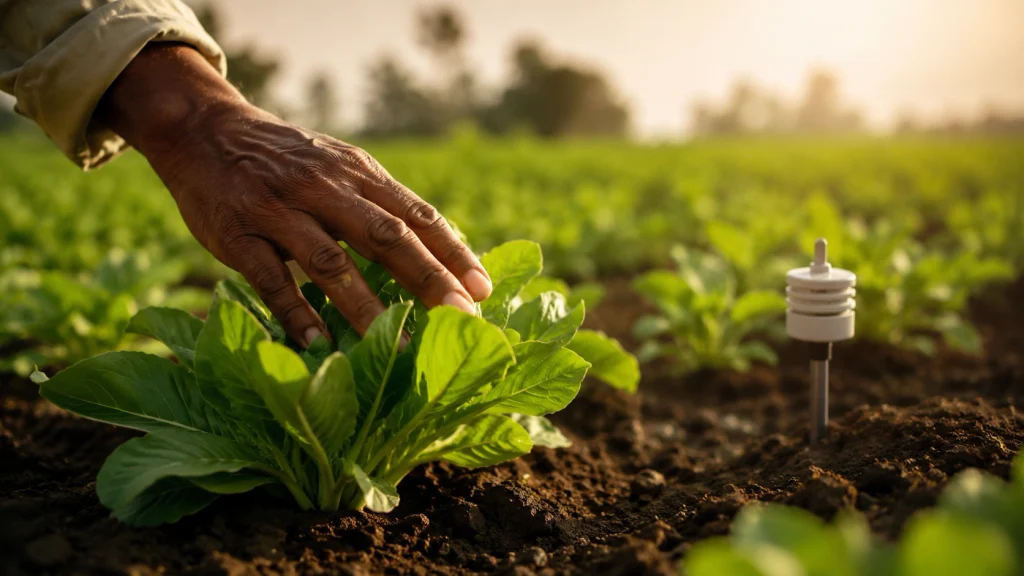
At the heart of many smart farming systems are sensors placed directly in fields, measuring factors like soil moisture, temperature, nutrient levels, and humidity in real time. Rather than relying on scheduled watering or fertilizing regardless of actual need, farmers can use this real-time data to apply exactly what a specific area of crops actually requires at that particular moment.
Satellite and Drone Imagery
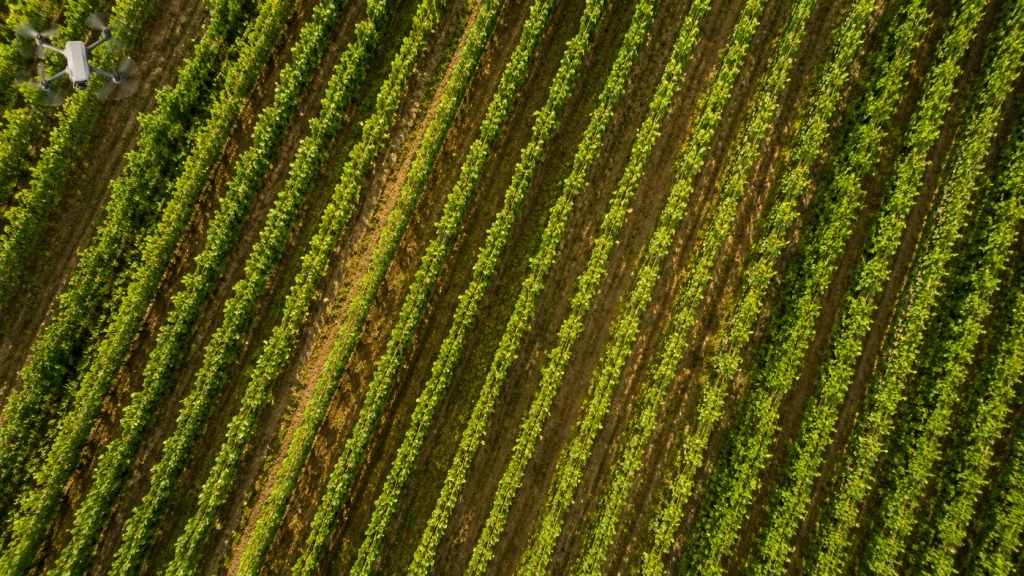
Satellite imagery and drone-based aerial photography allow farmers to monitor crop health across large areas far more efficiently than physically walking or driving through every section of a field. Specialized cameras can detect subtle changes in plant health, sometimes revealing stress from drought, disease, or pest damage well before it would be visible to the naked eye, allowing for earlier intervention.
GPS-Guided Equipment and Automation
Modern farming machinery increasingly incorporates GPS guidance systems, allowing tractors and other equipment to follow extremely precise paths across a field, minimizing overlap and gaps in planting, spraying, or harvesting. Some equipment now operates with significant autonomy, requiring minimal direct human operation for certain repetitive tasks, freeing up farmers’ time for other essential responsibilities.
Data Analysis and Farm Management Software
Collecting data from sensors, satellites, and equipment is only useful if that information can be effectively analyzed and acted upon. Farm management software platforms bring this data together, helping farmers identify patterns, predict potential problems, and make more informed decisions about planting schedules, resource allocation, and overall farm operations.
Automated Irrigation Systems
Smart irrigation systems use real-time soil moisture data to automatically adjust watering schedules, delivering water precisely when and where it’s actually needed rather than following a fixed schedule regardless of current conditions. This can significantly reduce water waste while helping ensure crops receive consistent, appropriate hydration.
How Smart Farming Helps Farmers Grow More Food
One of the most significant benefits of smart farming technology is improved crop yield, growing more food from the same amount of land. By precisely monitoring and responding to the specific needs of crops, farmers can address problems like nutrient deficiencies, pest infestations, or irrigation issues far more quickly than traditional methods typically allow, helping prevent smaller issues from developing into significant yield losses.
Beyond simply reacting to problems, predictive tools increasingly use historical and real-time data to help farmers anticipate potential challenges before they occur, whether that means adjusting planting schedules based on weather forecasts or identifying which fields might be at higher risk for a particular pest based on current environmental conditions.
Reducing Waste and Protecting Natural Resources
Smart farming isn’t only about producing more food, it’s also increasingly about producing food more sustainably. Precision application of water, fertilizer, and pesticides means fewer resources are wasted through over-application, while also reducing the environmental impact associated with excess chemical runoff into surrounding ecosystems.
Water use, in particular, benefits significantly from smart farming technology. Given how much agricultural water use contributes to overall regional water consumption in many areas, even modest efficiency improvements enabled by smart irrigation systems can have a meaningful cumulative impact on water conservation, particularly important in regions facing ongoing drought conditions or water scarcity concerns.
Helping Farmers Adapt to Unpredictable Weather
Climate variability presents one of modern agriculture’s most significant ongoing challenges, and smart farming technology offers farmers genuinely valuable tools for adapting to these unpredictable conditions. Weather monitoring systems integrated with farm management software can provide highly localized forecasts and alerts, helping farmers make more informed, timely decisions about planting, harvesting, or protective measures ahead of severe weather events.
Historical data analysis also allows farmers to identify long-term patterns specific to their exact location, informing decisions about which crop varieties might perform best under changing conditions, or when planting schedules might need adjustment compared to traditional timing that may no longer align as reliably with actual seasonal patterns.
This kind of localized insight is particularly valuable because climate impacts don’t affect all regions, or even all fields within the same region, in exactly the same way. A farm’s specific soil composition, elevation, and microclimate can all influence how it experiences broader climate trends, meaning generalized regional forecasts alone often aren’t precise enough to guide the most effective farm-level decisions. Smart farming technology helps bridge this gap by grounding broader climate data in the specific, localized conditions of an individual farm.
Making Small and Large Farms More Efficient
While much attention around agricultural technology focuses on large-scale industrial farming operations, many smart farming tools have become increasingly accessible to smaller farms as well. Lower-cost sensors, smartphone-based farm management apps, and simplified drone technology have made at least some smart farming benefits available to farmers operating on a much smaller scale than the large agribusiness operations these technologies were sometimes originally associated with.
This growing accessibility matters significantly, since small and mid-sized farms continue to represent a substantial portion of global food production, particularly in many developing regions where agricultural technology adoption has historically lagged behind larger, better-resourced operations.
Government programs, agricultural cooperatives, and nonprofit initiatives in various regions have also begun playing a meaningful role in expanding access to smart farming tools, sometimes through subsidized equipment, shared community resources, or educational programs designed to help farmers with limited technical backgrounds learn to effectively use these new tools. This kind of support infrastructure is often just as important as the underlying technology itself, since even genuinely useful tools provide little benefit if farmers lack the training, resources, or support needed to adopt them successfully.
Common Misconceptions About Smart Farming
A few misconceptions continue to shape how people think about smart farming and agricultural technology.
One common myth is that smart farming is only relevant to massive, industrial-scale agricultural operations. In reality, an increasing range of smart farming tools have become accessible and genuinely useful for small and mid-sized farms as well, not just large agribusiness operations. Another misconception is that smart farming technology replaces farmers’ expertise and decision-making entirely. In practice, these tools are generally designed to support and inform farmer decision-making with better data, rather than removing the need for experienced human judgment about how to actually run a farm. There’s also a common assumption that adopting agricultural technology is prohibitively expensive for most farmers. While upfront costs can be a genuine barrier for some, particularly smaller operations, decreasing technology costs and growing evidence of long-term savings through resource efficiency and improved yields have made smart farming increasingly cost-effective for a broader range of farming operations over time.
Why Smart Farming Matters for Global Food Security
As the global population continues growing, alongside increasing pressure on available farmland, water resources, and a changing climate, technology that helps farmers produce more food more efficiently, and more sustainably, plays an increasingly important role in global food security. Smart farming doesn’t eliminate the fundamental challenges facing modern agriculture, but it offers farmers genuinely valuable tools for meeting rising food demand while working within real, meaningful resource constraints.
This matters well beyond individual farms or specific regions, since global food supply chains depend on countless individual farming decisions made every single day, decisions that smart farming technology increasingly helps inform with more accurate, timely, and localized information than was available to previous generations of farmers.
Final Thoughts
Smart farming represents a significant, practical evolution in how food is grown, combining traditional agricultural knowledge with modern technology like sensors, satellite imagery, automation, and data analysis. Rather than replacing farmers, these tools are increasingly helping them make more precise, timely, and informed decisions, ultimately supporting higher yields, reduced waste, and more sustainable resource use.
As agricultural technology continues advancing and becoming more accessible across farms of all sizes, smart farming is likely to play an increasingly central role in how the world continues to feed a growing population, even as farmers navigate real, ongoing challenges like climate change and limited natural resources.
Frequently Asked Questions
What is smart farming, in simple terms? Smart farming refers to the use of technology like sensors, satellite imagery, automation, and data analysis to help farmers make more precise, informed decisions about growing crops efficiently and sustainably.
How does smart farming actually help increase crop yields? By monitoring real-time conditions like soil moisture and crop health, farmers can address problems like nutrient deficiencies or pest issues more quickly, helping prevent smaller issues from significantly reducing overall yield.
Is smart farming only useful for large agricultural operations? No. While it’s often associated with large-scale farming, increasingly affordable tools like smartphone apps and simplified sensors have made many smart farming benefits accessible to small and mid-sized farms as well.
Does smart farming technology replace the need for farmers’ expertise? No. These tools are generally designed to support farmer decision-making with better data, rather than replacing the experienced judgment required to actually operate a farm successfully.
How does smart farming help with environmental sustainability? Precision application of water, fertilizer, and pesticides reduces resource waste and environmental runoff, while smart irrigation systems in particular can meaningfully improve water conservation efforts.