What Are Comets and Asteroids? Learn the Basics

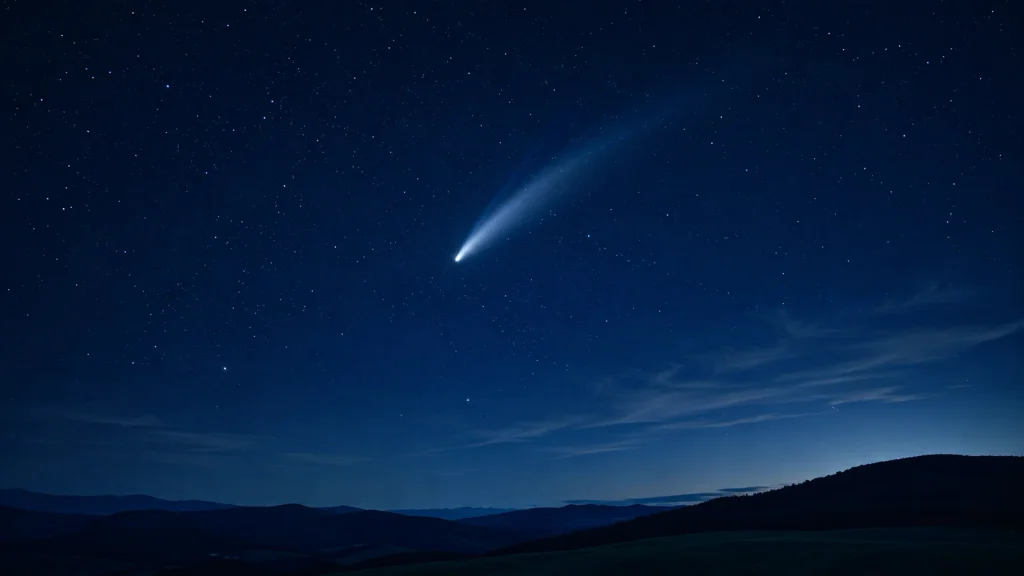
If you are watching a clear night sky for a long period of time, you may be able to see a bright flash of light, a shooting star, or, rarely, a fluffy glowing object that moves slowly over the course of several nights. Comets and asteroids are two of the most interesting relics of the solar system’s formation and are often linked to these sights. Though they’re often referred to together in everyday speech, they’re very distinct in terms of composition, origin, and behavior.
This guide explains what comets and asteroids are, how they differ, and why scientists are so interested in them for what they reveal about the history of our solar system.
Asteroids Are Rocks That Orbit the Sun
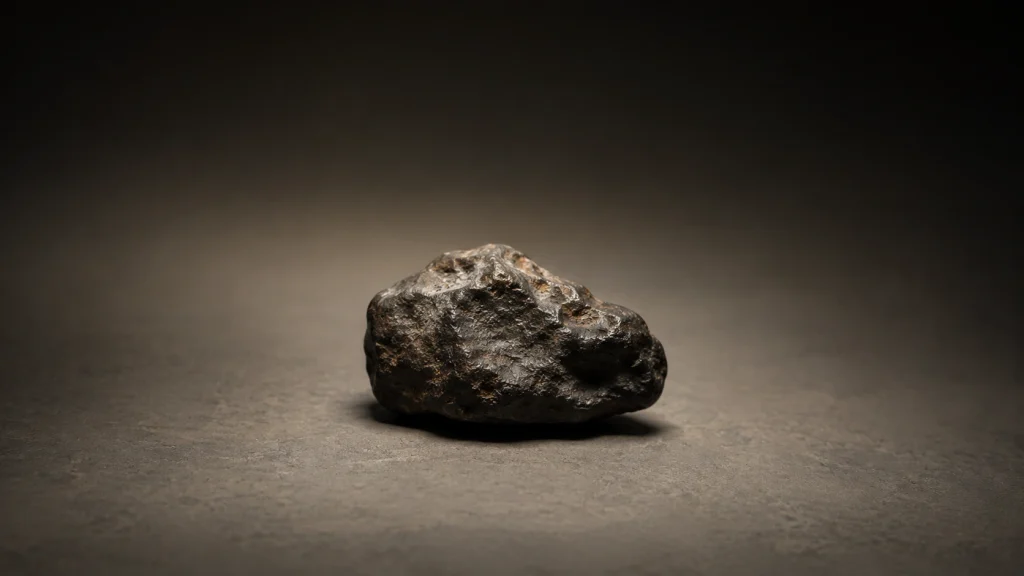
Asteroids are large, rocky, metallic objects that revolve around the Sun but are not large enough to be called planets. Some are very small (a few meters across), while the largest known is Ceres, a planet-like object about 940 kilometers across, which is technically classified as a dwarf planet.
The majority of asteroids in our solar system are found in the asteroid belt, the region between Mars and Jupiter. Asteroids in the belt are not so tightly packed that spacecraft are in danger crossing through it; they are actually quite sparse across the immense volume of space they occupy.
Comets: Ice, Dust, and Glowing Tails
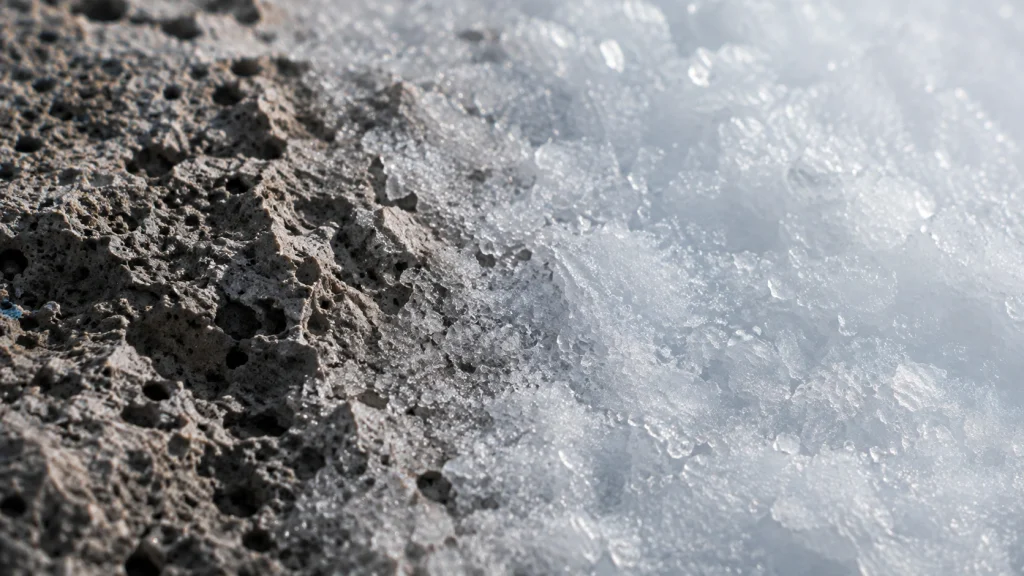
Unlike asteroids, which are made of more rocky material, comets consist mostly of ice, dust, and rocky material. Comets are usually found in much colder, farther-out parts of the solar system than asteroids, beyond the orbit of Neptune.
One key trait of comets is that as they near the Sun, they begin to exhibit very distinctive behavior. When a comet enters the inner solar system, solar heat starts to melt its surface ice, and gases and dust are ejected in a process known as outgassing. A glowing cloud, or coma, forms around the solid nucleus of the comet, along with the long glowing tail that gives comets their impressive appearance and makes them stand out from a typical star or planet when viewed from Earth.
The Origin of Asteroids and Comets
Understanding their origin explains many aspects of their different behavior and composition.
The majority of asteroids are thought to be remnants from the formation of the solar system about 4.6 billion years ago, when rocks failed to accrete into a planet because the gravitational pull of nearby Jupiter was too strong. This is why most asteroids remain in the asteroid belt, an area directly affected by Jupiter’s gravitational pull.
By comparison, comets are typically found in the Kuiper Belt—a disc-shaped region of icy objects beyond Neptune’s orbit—and the Oort Cloud, an even more distant, sphere-shaped region of theorized icy objects surrounding the entire solar system. Objects in these regions, so far from the warmth of the Sun, are extremely cold and icy, and so have retained a much higher percentage of the original material that formed the solar system than objects closer to the Sun.
How the Orbits of Comets and Asteroids Differ
Comets and asteroids also differ significantly in the shape of their orbits around the Sun. Most asteroids have relatively circular, predictable orbits and typically remain at a fairly constant distance from the Sun throughout their orbit.
By contrast, comets tend to have highly eccentric orbits, with some coming very close to the Sun at one end of their orbit only to travel very far out at the other end. For this reason, comets are only seen from Earth occasionally—sometimes only once in a human lifetime, or rarely, only once every few centuries—depending on how long it takes for their individual orbit to bring them close to the Sun and to the vicinity of Earth.
Comets Are the Birthplace of Meteor Showers
An especially intriguing connection is the one between comets and meteor showers, which many people have observed without realizing the cause. As comets move through the inner solar system, they leave a trail of dust and small debris along their orbital path around the Sun.
When Earth’s own path around the Sun crosses one of these trails, tiny pieces of debris plow through the atmosphere at tremendous speeds and burn up, leaving behind streaks of light—shooting stars. This is why, at approximately the same time each year, Earth passes through certain comet debris trails, each directly tied to the orbital path of the comet that created it.
Why Scientists Study Comets and Asteroids So Closely
Beyond their visual appeal, comets and asteroids are of great scientific interest because they are among the most primitive materials in the solar system, largely unchanged since its earliest days.
Unlike Earth, asteroids and comets have not endured the same violent activity—such as volcanic eruptions and plate tectonics—that has reshaped planets over billions of years, making them a relatively undisturbed window into the early solar system. This is one reason space agencies have launched missions to study asteroids, and in some cases to physically collect samples from them—and occasionally from comets—in order to better understand the raw materials and processes that eventually led to the formation of planets, and perhaps even the conditions for life.
Several of these missions have gone beyond simple observation, successfully placing instruments on a comet’s surface, landing on it, or gathering physical samples from an asteroid and returning them to Earth for detailed laboratory analysis. Such “sample return” missions are especially valuable because material can be examined far more precisely in a laboratory than through remote observation, offering a wealth of information about the chemical makeup of the solar system’s earliest history.
Risk and Impact: Should We Be Worried?
The fear of an asteroid impact with Earth is a topic that can’t be overlooked when discussing asteroids and comets. Most asteroids and comets pose no real concern, since the chance of them hitting Earth is quite small and the distances involved are vast. Even so, scientists take the possibility seriously and run programs dedicated to tracking and monitoring these objects.
Many organizations worldwide track near-Earth objects, continuously updating the positions of those detected and calculating the odds of future close encounters with Earth. This ongoing monitoring is designed to provide early warning in the unlikely event that a genuine impact risk is identified, allowing time for further research or, in a worst-case scenario, for mitigation efforts.
Space agencies have even tested methods for altering the trajectory of an asteroid, in case a real threat is ever discovered. These missions have shown that it is possible to deliberately shift an asteroid’s orbital path and produce a meaningful change in its trajectory—suggesting that humanity may have the means to respond to a real asteroid impact threat, given enough advance warning.
Common Misconceptions About Comets and Asteroids
A few common misconceptions persist about comets and asteroids, and most don’t hold up under closer scrutiny.
One misconception is that the asteroid belt is so densely packed with rocks that any spacecraft passing through would be in serious danger. In reality, asteroids in the belt are spread across a vast area of space, and several spacecraft have passed through safely without risk of collision.
Another false idea is that comets and asteroids are essentially the same thing, just called by different names. In fact, they differ considerably in composition—comets being icy and dusty, asteroids being rocky or metallic—as well as in their typical origin and orbital dynamics.
A further common belief is that large asteroid or comet impacts happen regularly and frequently. While smaller impacts do occur from time to time (typically causing little damage, since they burn up in the atmosphere), truly major impact events are very rare on a human timescale, occurring roughly once every thousands to millions of years.
Final Thoughts
Comets and asteroids are often used interchangeably in everyday speech, but in reality they are very different objects, offering very different glimpses into the history of the solar system. Asteroids, mainly rocky, are concentrated near Jupiter’s orbit, while comets, icy objects originating from the outer reaches of the solar system, both serve scientists as valuable, well-preserved materials that carry information from billions of years ago.
Understanding the basics of these two types of objects offers a deeper appreciation of the solar system’s history, and makes those occasional moments of wonder in the night sky a little more meaningful—tying a fleeting glimpse of light to processes and materials nearly as old as the solar system itself.
Frequently Asked Questions
What’s the main difference between a comet and an asteroid?
Asteroids are rocky or metallic objects usually found in the asteroid belt, while comets are icy, dusty objects that reside in much colder regions of the solar system.
Why do comets have visible tails while asteroids don’t?
Comets contain far more ice than asteroids do, and as a comet approaches the Sun, solar radiation heats its surface, causing gas and dust to form the characteristic glowing coma and tail.
Do meteor showers have anything to do with comets?
Yes. Meteor showers occur when Earth passes through a trail of debris left behind by a comet; the small particles burn up in the atmosphere, producing visible streaks of light.
Would it be safe for a spacecraft to fly through the asteroid belt?
Yes—despite popular assumption, asteroids in the belt are not densely concentrated but are spread out so widely that spacecraft have passed through safely many times without significant risk of collision.
Are scientists keeping watch on asteroids and comets for possible impacts on Earth?
Yes. Several organizations continuously monitor near-Earth objects and calculate the likelihood of future close encounters, so that if a significant impact risk is ever identified, a warning can be issued as early as possible.