Learn Big Bang Theory: How We Began

Learn Big Bang Theory: How We Began
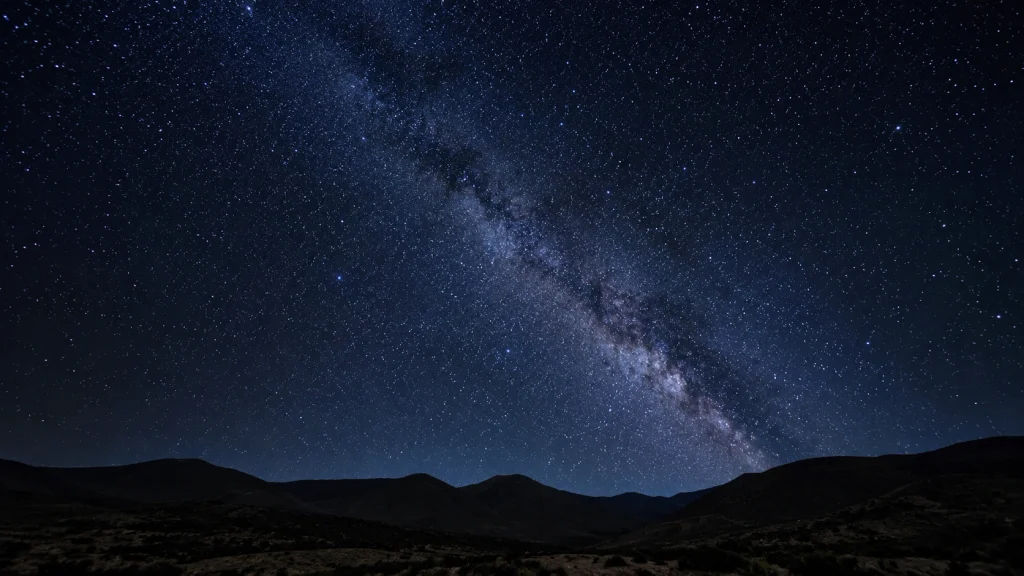
At night, when you gaze into the heavens, it seems that the universe is vast, silent and unchanged. But all we can see — all the stars, galaxies, planets, etc. — are a result of an almost unimaginable beginning, according to almost a century of scientific evidence. The first instant is called the Big Bang.
This guide explains what the Big Bang theory really means, and how scientists came to the theory. It also provides information on what the Big Bang theory reveals about the beginning of our universe, without requiring a physics background.
What the Big Bang Really Was
The name Big Bang may suggest an explosion, but the Big Bang was not an explosion in the usual sense of the word, where fire and debris flew outwards into space. Rather, the Big Bang theory refers to the time about 13.8 billion years ago when the entire universe was initially in a very hot, dense state and began expanding.
All of the matter and energy that would come to form the galaxies, stars and planets was compressed into a very small volume at that time. From there, space began to expand along with time, and it has been expanding ever since. This is important because the Big Bang didn’t occur in space — it occurred when space began.
How Scientists Reached This Theory
The concept of an expanding universe did not just appear out of nowhere — it was pieced together through observation over a period of decades.
Hubble’s Discovery of an Expanding Universe
In the 1920s, astronomer Edwin Hubble noticed that all distant galaxies are moving away from us, and the further away a galaxy is, the faster it appears to be receding. This pattern implied that the universe itself was growing in size, rather than galaxies simply moving through a pre-existing, static space.
If the universe has been expanding for billions of years, then it must have been smaller, hotter and denser in the past. When scientists trace that expansion backward, they arrive at the notion of a single, extremely dense beginning.
The Discovery That Sealed the Theory
Hubble’s observations were important evidence of an expanding universe; however, the theory was overwhelmingly confirmed by the discovery of cosmic microwave background radiation in 1965.
If the universe really had started out in a very hot, dense form, it should today be permeated by an “afterglow” of radiation, spread almost evenly in every direction. The discovery of exactly this radiation by Arno Penzias and Robert Wilson — who were actually working on an unrelated radio antenna project — was such strong confirmation of the Big Bang theory that it became known as the “cosmic microwave background” radiation.
This cosmic microwave background is sometimes referred to as the oldest light in the universe, offering a picture of the cosmos as it was about 380,000 years after the Big Bang, once it had cooled enough for light to travel freely for the first time.
What Happened in the Primeval Moments
Based on clues from physics and astronomy, scientists have compiled a general history of what probably happened in the early universe.
In the first fraction of a second, the universe underwent a very rapid expansion, called inflation, increasing in size by an enormous factor in an extremely small amount of time. As the universe expanded and cooled, fundamental particles emerged and eventually joined together to form the simplest atoms — mostly hydrogen and helium.
The universe was dark, with matter scattered unevenly, for hundreds of millions of years before gravity drew the matter back together to form the first stars and galaxies. These early structures evolved over billions of years into the increasingly complex universe of planetary systems, stars and galaxies that we see today.
Astronomers sometimes call the period between this cooling and the appearance of the first stars the cosmic “dark ages,” because the universe existed but produced no starlight of its own. Nuclear fusion only switched on once the first stars formed, when hydrogen gas gravitationally collapsed into dense enough clumps — marking the first time the universe produced its own light since the initial afterglow of the Big Bang had faded.
Misconceptions About the Big Bang
Several misconceptions persist about the Big Bang, and most of these do not stand up to scrutiny.
The most popular misconception is that the Big Bang was an explosion that took place at a single point in space. In fact, space itself began expanding at that moment, so the Big Bang did not happen at one point from which matter was ejected — it happened everywhere at once.
Another false assumption is that the Big Bang explains how the universe came to exist. Science today explains how the universe evolved from a very hot, dense state — but what happened before that remains a mystery that present-day science cannot fully explain.
A third widespread idea is that the universe is expanding into some “empty” space beyond its limits. In reality, the universe has no “outside” in the way we normally think of one, and expansion is simply an increase in space itself, not objects moving through pre-existing space.
Why Support for the Big Bang Theory Continues to Grow
The Big Bang is not a theory that was proposed once and never challenged again — it has been tested repeatedly through several independent lines of evidence.
In addition to the expansion of galaxies and the discovery of cosmic microwave background radiation, researchers have also studied the relative abundance of light elements such as hydrogen and helium throughout the universe, finding that it is very well predicted by Big Bang models. Over the past few decades, space telescopes have mapped the cosmic microwave background in great detail, deepening our understanding of the age, composition and early structure of the universe.
Today’s telescopes continue to look deeper and further into the universe, advancing our view further back in time. The more data that is collected, the more the Big Bang model is tested and refined — and the accumulating evidence continues to strongly support it.
What the Big Bang Theory Doesn’t Explain
The Big Bang theory is one of the most accepted theories in contemporary science, but it’s important to understand its limits. The theory describes the evolution of the universe from an extremely hot, dense state, but it does not yet fully explain what existed before that state, or what caused it to arise in the first place.
Theoretical physics and cosmology continue to investigate these questions, including ideas involving quantum fluctuations, the possibility of multiple universes, and the fundamental nature of space and time. These remain active research areas rather than settled facts, and genuine scientific debate continues in this field.
The Big Bang’s Relationship with the Future of the Universe
Knowing the origin of the universe naturally raises questions about where it is heading. Since the universe was found to be expanding, astronomers have also determined that this expansion appears to be accelerating, driven by a poorly understood force called “dark energy.” This remains one of the most enigmatic mysteries in physics today.
Given this ongoing expansion, scientists have proposed a few different scenarios for the universe’s ultimate fate. Some models suggest the universe could expand forever, with galaxies drifting farther apart until stars burn out and the universe grows dark and cold — a scenario known as the “heat death” of the universe. Other, less widely favored models consider the possibility of a future contraction back toward a dense state.
These questions extend directly from Big Bang cosmology, since understanding the beginning of the universe is essential to forming reasonable expectations about its likely future, trillions of years from now.
Why Understanding the Big Bang Matters
Learning about the Big Bang is not just a matter of satisfying curiosity about the distant past. It underpins much of what modern astronomy studies today, from the origin of galaxies to the abundance of elements found throughout the universe.
Understanding this cosmic beginning also helps explain why elements exist in the particular proportions we observe, why the universe has taken its current large-scale form, and why everything from stars to planets to life ultimately traces back to the same early conditions.
Final Thoughts
The Big Bang theory is a well-supported explanation for the origin of our universe in its present form, beginning as an extremely hot and dense state about 13.8 billion years ago. It has been built up from multiple independent lines of evidence, from the expansion of galaxies to the faint afterglow of cosmic microwave background radiation, making it one of the best-tested theories in modern science.
Though questions remain about what happened before this cosmic beginning, and what will happen in the far future, the evidence continues to mount in support of the universe’s expansion and evolution since that moment — bringing us closer to understanding how everything we see came to be.
Frequently Asked Questions
What really occurred at the Big Bang?
The Big Bang refers to the moment, about 13.8 billion years ago, when the universe began expanding rapidly from a very hot, dense initial state. It then cooled over time to form the stars, galaxies and planets we see today.
What is some proof of the Big Bang theory?
Key evidence includes the expansion of galaxies, the discovery of cosmic microwave background radiation, and the observed abundance of light elements such as hydrogen and helium — all of which align closely with the predictions of Big Bang models.
Was there one particular point in space where the Big Bang occurred?
No. Space itself began expanding at that moment, so the Big Bang happened everywhere at once, not at a single point from which matter was ejected.
What existed prior to the Big Bang?
This remains an open question in science. What existed before it is not fully known, but current physics can explain how the universe evolved once it was in that hot, dense state.
Is the Big Bang theory still believed to be true today?
Yes. It remains one of the most well-supported theories in modern science and continues to be reinforced by decades of independent observation and astronomical research.