How Robotics Works Without Confusion

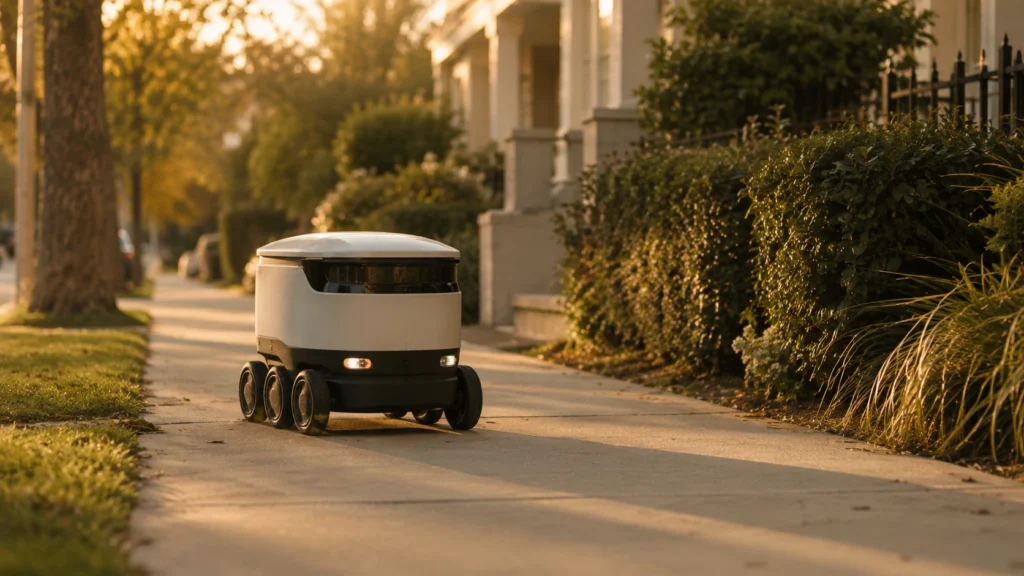
Delivery robots roll down sidewalks in some cities without people giving them a second thought, robotic arms assemble cars on factory floors, and robot vacuums quietly clean homes and living rooms. Robotics can seem like a high-tech, complicated field reserved for engineers and science fiction, but the underlying principles are actually quite straightforward.
This guide breaks down the basics of robotics step by step, in plain language, using everyday examples, so the core concepts are understandable without any prior engineering knowledge.
A Quick Look at How Robotics Got Here
The concept of building machines that can act independently isn’t new, it’s been part of human imagination for centuries, long before there was any means of making it a reality. Early industrial robots from the mid-20th century were large, stationary machines limited to specific tasks like welding or assembly, far less flexible than the industrial robots of today.
As computing power increased and sensors became smaller, cheaper, and more accurate, robots gradually became capable of more sophisticated behavior. Robots gained the ability to respond to their real environment as they moved, opening the door to far more useful and flexible applications.
This shift, from static machines performing fixed tasks to systems that respond to their environment through sensors, is what made technologies like robot vacuums, delivery robots, and collaborative industrial arms possible. Understanding this progression helps explain why modern robotics feels so different from the robots seen in older science fiction: today’s robots aren’t trying to emulate human appearance, they’re focused on solving specific tasks efficiently.
What a Robot Actually Is
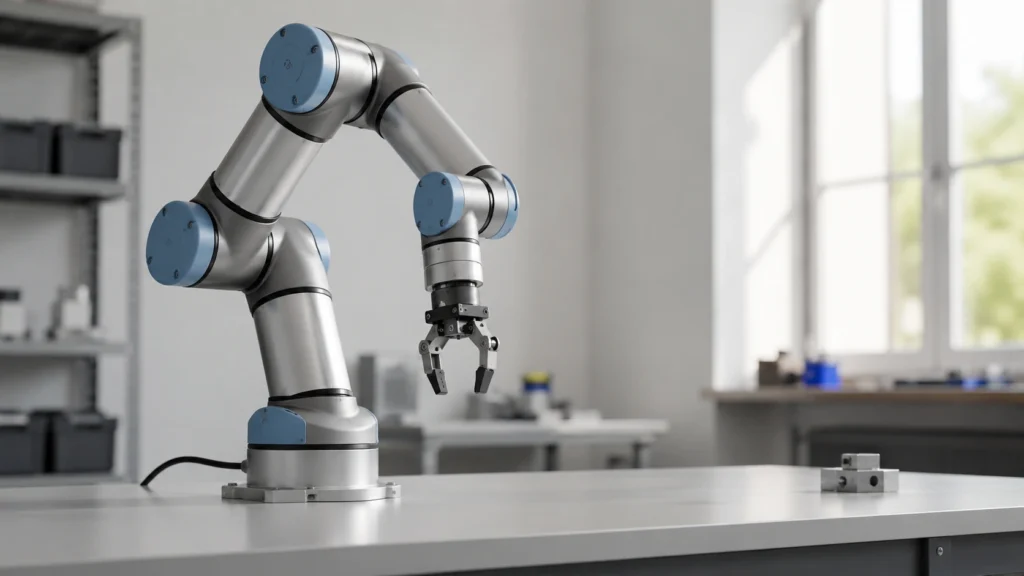
In its simplest form, a robot is a machine that can sense its environment, process that information, and physically respond to it. Many robots don’t look like the robots from movies, plenty are simple arms, wheeled devices, or stationary machines that are very good at one specific task.
A robot differs from an ordinary machine because it can sense, decide, and act, often repeatedly and with a degree of independence, rather than simply following a fixed, unchanging pattern.
The Three Core Components of Every Robot
Almost every robot, regardless of its size, shape, or function, relies on three basic building blocks working together.
Sensors: How Robots Perceive Their Surroundings
Sensors serve as a robot’s eyes, ears, and sense of touch. They collect data from the environment, such as distance, light, temperature, sound, or movement, and convert it into information the robot’s system can use.
A robot vacuum, for instance, uses sensors to detect walls, furniture, and drop-offs like stairs. On an assembly line, a robotic arm might use a sensor to determine the precise location of a component before picking it up. Without sensors, a robot would essentially be blind, unable to react to anything happening around it.
Processors: How Robots “Think”
Once sensors collect data, that information needs to be interpreted and acted upon. This is where a robot’s processor, its “brain,” comes in. The processor runs software that analyzes sensor data and determines what the robot should do next.
This decision-making can range from very basic to highly complex. A simple robot might follow straightforward pre-programmed instructions, such as “turn left if there’s an obstacle.” More sophisticated robots use more advanced algorithms, and increasingly artificial intelligence, to make nuanced decisions based on changing conditions.
Actuators: How Robots Physically Move
Once a robot decides on a course of action, it needs a way to carry it out. This is the role of actuators, the motors, gears, and mechanical components that allow a robot to move, grip, rotate, or perform other physical tasks.
Actuators convert electronic signals into physical movement. In a robotic arm, actuators might rotate a joint or close a gripper. In a wheeled robot, actuators power the wheels to move forward, backward, or turn. Without actuators, a robot could sense and process information, but it would have no way to actually act on it.
How These Parts Work Together
Understanding robotics becomes much clearer once you see how sensors, processors, and actuators work together in a continuous loop.
First, sensors collect data about the surroundings. Next, the processor interprets that information and decides what to do. Finally, actuators physically carry out that response. This cycle repeats continuously, often many times per second, allowing the robot to constantly adapt to changing conditions rather than simply performing a single, fixed action.
Whether it’s a robot vacuum cleaning a living room or a complex industrial robot assembling delicate electronics, this sense-think-act loop is the foundation of virtually all robotic systems.
Different Types of Robots and How They’re Used
Robots come in many forms, and understanding the main categories helps clarify just how broad the field really is.
Industrial robots are commonly used in manufacturing to perform repetitive tasks such as welding, assembling, or packaging with precision and speed. Service robots handle routine chores, including vacuuming, lawn-mowing, and delivery. Medical robots assist doctors with precision tasks or support patient care and rehabilitation. Exploration robots are built for environments too risky or difficult for humans to access, such as space missions or deep-sea research. And increasingly, autonomous robots, like self-guided delivery robots, are capable of navigating and making decisions with minimal human intervention.
Every category shares the same basic sense-think-act structure, but each robot is equipped with different sensors, processing power, and actuators depending on its intended use.
The Role of Programming and Software
Sensors and actuators make up the physical side of robotics, but software is what tells a robot what to do with the information it gathers. A robot’s programming defines the rules, logic, and decisions it will make.
In simpler robots, this programming may involve straightforward, rule-based instructions. In more sophisticated systems, software increasingly relies on machine learning, allowing robots to improve their performance over time through experience rather than following only rigid, pre-programmed instructions. This is part of why modern robots can handle more complex and less predictable environments than earlier generations of robotic systems.
Power, Design, and Real-World Constraints
Beyond sensors, processors, and actuators, real-world robots also have to work within practical engineering limitations that shape how they’re built and what they can actually do.
Power supply is one major constraint. A robot’s batteries need to be large enough to provide sufficient energy, but not so large that the robot becomes too heavy or bulky to operate efficiently. This is part of why robot vacuums, for example, are designed to return automatically to a charging dock rather than running continuously on a single charge.
Durability and environmental considerations also play a major role in robot design. A robot built for warehouse use doesn’t need to be as weatherproof as one designed for outdoor delivery or deep-sea exploration, so engineers tailor materials, sealing, and structural design to match where the robot is expected to operate.
Cost and complexity matter as well. Adding more sensors or more advanced processing can improve a robot’s capabilities, but it also increases cost and potential points of failure. Practical robotics design tends to focus less on maximizing every possible feature and more on finding the right balance of capability and simplicity for a given task.
Common Misconceptions About Robotics
A few misunderstandings tend to make robotics feel more complicated, or more mysterious, than it actually is.
A common myth is that all robots are highly intelligent and capable of independent thought. In reality, most robots don’t genuinely understand or reason through a task, they simply follow rules and logic built into their programming. Another misconception is that robotics only applies to advanced manufacturing or science fiction scenarios, when in fact robots are becoming increasingly common in everyday life, from household cleaning devices to delivery services. There’s also a common assumption that building a robot requires deep expertise across many technical disciplines at once, when in reality, robotics is typically approached as a combination of manageable, specialized components, sensing, processing, and movement, rather than one overwhelming discipline.
Why Learning the Basics of Robotics Is Useful
While robotics is a technical field, understanding its fundamentals can still be genuinely useful. It offers a clearer picture of how many modern conveniences actually work, from automated vacuums to warehouse fulfillment systems. It also provides valuable context for discussions about automation, since much of the conversation around jobs, efficiency, and technology ultimately comes down to how sense-think-act systems are being applied to new tasks.
For anyone interested in exploring robotics further, whether as a hobby or a career, understanding how sensors, processors, and actuators work together offers a solid starting point before moving into more advanced or specialized topics.
Final Thoughts
From the outside, robotics can seem like a complicated, daunting discipline, but at its core, it’s a fairly straightforward process: sense the environment, process that information, and act on it through physical movement. With a basic understanding of how sensors, processors, and actuators work together, robots start to feel like logical systems built from understandable, connected parts, rather than futuristic, unknowable technology.
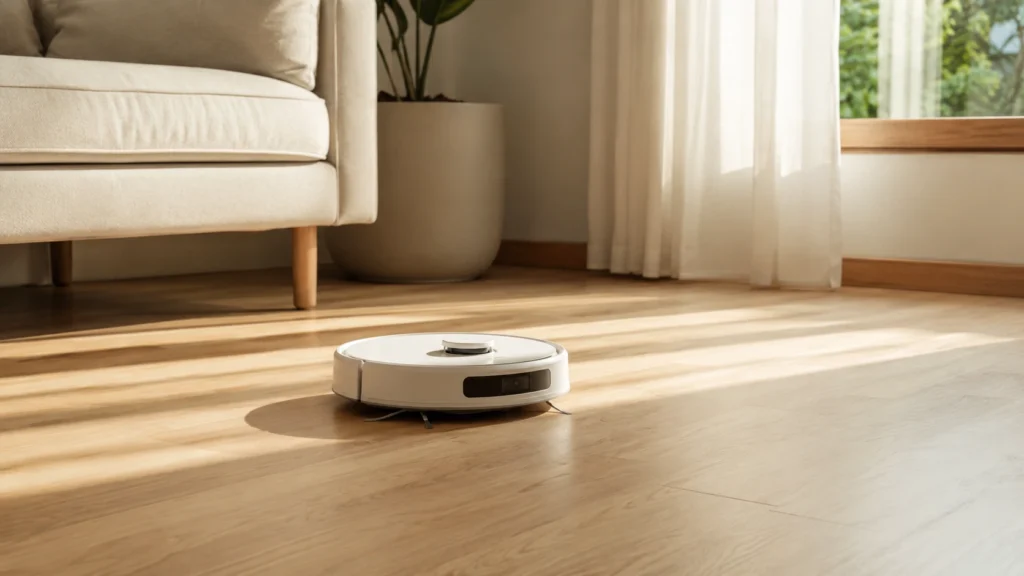
Whether it’s a small vacuum navigating a living room or a sophisticated robotic arm assembling precision electronics, the same fundamental principles are quietly at work, making robotics far less mysterious than it might initially seem.
As sensors, processors, and batteries continue to improve, expect robots to keep showing up in more places, quietly handling more tasks, without necessarily looking or acting anything like the robots of science fiction.
Frequently Asked Questions
What are the three main components every robot needs?
Most robots rely on sensors to perceive their environment, a processor to interpret information and make decisions, and actuators to physically carry out actions.
How do robots actually “think”?
Robots use processors running software that interprets sensor data and applies either fixed rules or, in more advanced systems, machine learning to determine an appropriate response.
Are all robots controlled by artificial intelligence?
No. Many robots operate using straightforward, pre-programmed rules rather than AI, though more advanced systems increasingly incorporate machine learning for more complex decision-making.
What’s the difference between industrial and service robots?
Industrial robots are typically used for repetitive, high-precision tasks, while service robots are used for everyday tasks like cleaning, delivery, or household chores.
Do you need a strong engineering background to understand robotics basics?
No. The core concept, sensors gathering information, processors making decisions, and actuators creating movement, can be understood without any specialized technical training.